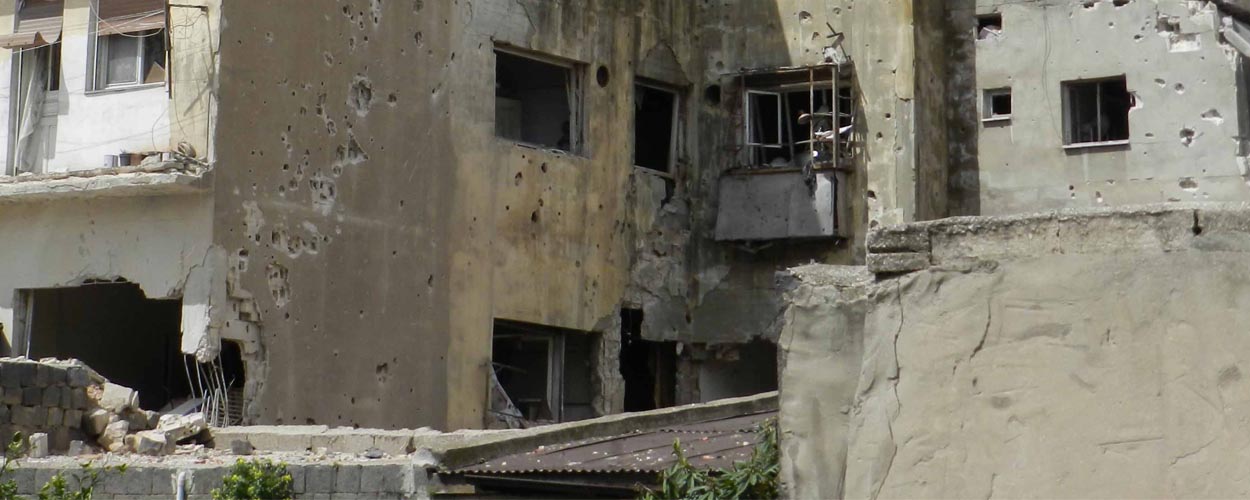
“Manbij. May God protect it,” the great traveler Ibn Jubayr of Valencia wrote in June 1184. “Its skies are bright, its aspect handsome, its breezes fragrant and perfumed, and while its day gives generous shade, its night is all enchantment.” These raptures eluded me when I visited the city 800 years later, in 1987, and wrote, “It was a dull, lifeless place. Either it had lost its glory, or Ibn Jubayr, like many travelers before and since, had exaggerated: Manbij was, simply, a dump.”
But “Days of Love and Rage,” the journalist Anand Gopal’s epic tribute to Manbij’s population during Syria’s 14-year civil war, forces me to recant. The heroic beauty of the city’s people, as Gopal portrays them, struggling for freedom with its attendant glories and travails more than compensates for the eyesore that is its motley collection of concrete hovels and Baath Party monstrosities.
There have been many books about Syria since the earliest days of unrest in 2011, but the closest kin to “Days of Love and Rage” is “Homage to Catalonia,” George Orwell’s indelible 1938 portrait of the fractious partisans struggling to save the Spanish republic from dictatorship. Like Orwell’s masterpiece, Gopal’s account is destined to stand out as the definitive text of the war.
Gopal, a contributing writer for The New Yorker and the author of a similarly rich telling of America’s misadventures in Afghanistan, “No Good Men Among the Living,” labored on this book for eight years. With the help of a research team that comprised half a dozen locals — “all protagonists of the revolution in Manbij,” he writes — Gopal collected 2,000 interviews, watched hundreds of on-scene wartime videos and read thousands of texts to tell the story of six ambitious rebels in a remote provincial town that even many Syrians had not heard of until war and revolution engulfed it.
Continue reading →