Tag Archives: London Review of Books

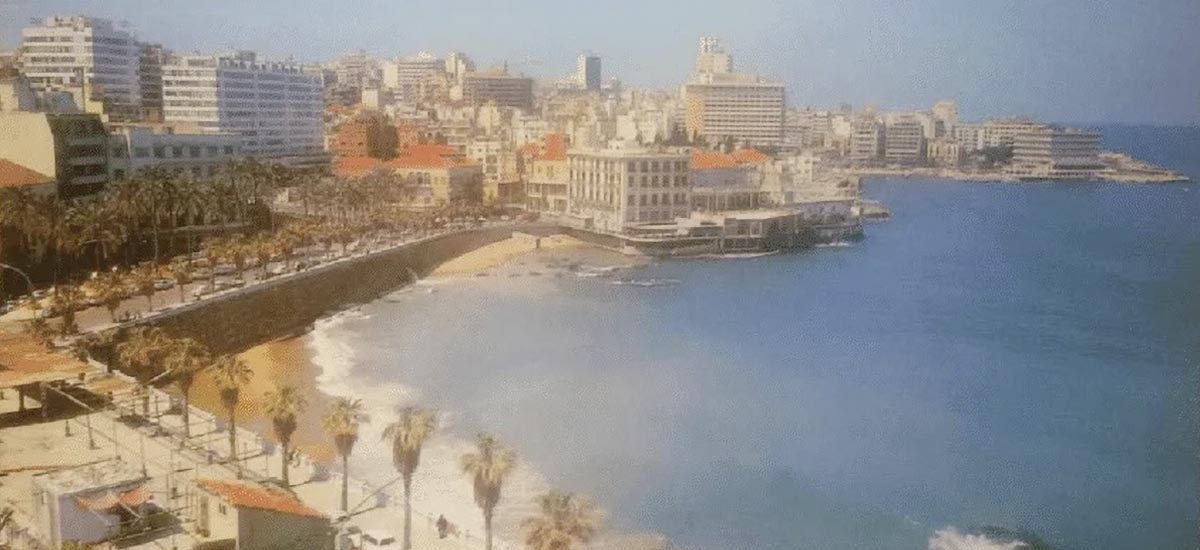
Avenue Francais, 1970's; Picture showing the two bays of Zaytouni and Saint Georges; New Royal Hotel in the foreground, and the Saint Georges Hotel in the Background occupying the tips of the bays

Beirut, Now and Then

On Wednesday​ , 8 April, Israel expanded its kill zone beyond what had been known as the ‘safe’ areas north of Beirut’s suburban south. I talked to a doctor at the American University Hospital who told me his emergency room was treating four hundred patients wounded in the bombing. Four had died. I passed the hospital, where families outside were waiting for the medical staff’s reports. By the evening, the Health Ministry put the death toll at 182, already a day’s record for the round of fighting that began on 2 March, later raising the total to more than three hundred. Among the dead was a young man who worked in the Thai restaurant round the corner from my house. His family, like so many others, is in mourning. The last five weeks of Israel-Hizbullah warfare have produced more than five thousand Lebanese casualties.

When I walked home from dinner at the end of this worst day in this latest war, our western half of the city looked pretty much as it does in periods of peace: cafés filled with families having coffee or ice cream, shops open and brightly lit, boys kicking footballs on forecourts, bins overflowing with rubbish, babies in pushchairs rolled along broken pavements, music blaring from bars and men lugging plastic bags of groceries from Spinneys supermarket. It had been a long day of fear, not knowing where the Israeli jets would strike next.

I went home to sleep, but that wasn’t the way my days in troubled times here used to end. When war kicked off in Lebanon in 1975, the foreign press corps congregated on most evenings in the bar of the Hotel Saint Georges. Over the barman Ali Bitar’s martinis and other concoctions, we compared impressions of our daylight excursions to the fluctuating frontiers between Beirut’s mutually hostile neighbourhoods. Our dispatches filed by telex, we relaxed in leather armchairs, well out of mortar range, or so we imagined, and took counsel from the impeccable concierge, Mansour Breidy. We also garnered what gossip we could from politicians, bankers, arms dealers and oilmen. It was a rare correspondent who turned up in anything less than jacket and tie. We took consolation in the calming panorama of Saint George Bay and talked ourselves into somnolence in preparation for the morning’s savagery.

Continue reading →
Master of the Game by Martin Indyk

He’ll have ye smilin’

Time​ magazine called him ‘Henry of Arabia’ and featured him on a cover in 1974. The headline read ‘Mideast Miracle’. Newsweek depicted him that same day as ‘Super K’ in a fluttering blue cape. The New York Times, Washington Post and the television networks piled on their own encomia. Henry Kissinger, already a media darling, had become the Middle East’s saviour, whose ‘shuttle diplomacy’, then a neologism, had ended the Arab-Israeli War of October 1973.

Nixon had appointed him secretary of state a month before the war broke out. Born Heinz Alfred Kissinger, the German-Jewish Harvard professor didn’t fit the State Department stereotype: all 55 of his predecessors were native-born WASPs. His Dr Strangelove accent remained a lifelong reminder of his émigré status. (Golda Meir, Israel’s prime minister at the time, told him that her foreign minister spoke better English than he did.) Yet after becoming a naturalised American at the age of twenty he liked to describe himself in terms of his adopted country’s folklore. He told a reporter that he was ‘a cowboy who rides alone into town with his horse and nothing else’. He also resembled another American frontier archetype: the pedlar whose wagonload of patent medicines promised to cure every ailment. By the time the rubes realised that his bottles contained snake oil, he had left town. ‘He’ll have ye smilin’,’ an old Irish saying goes, ‘while he takes the gold out of your teeth.’

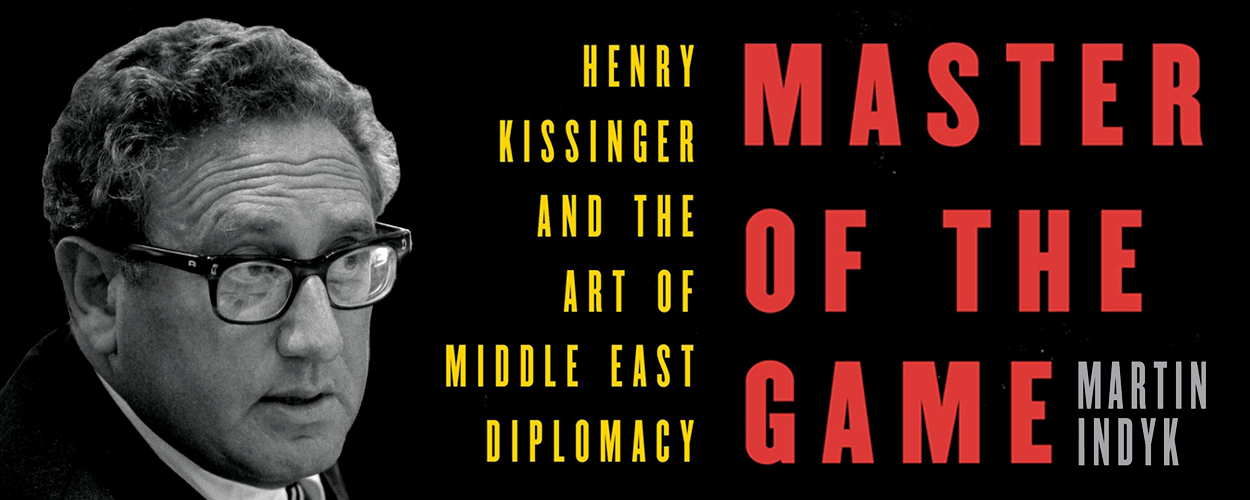
In Master of the Game, Martin Indyk shows Kissinger at work before, during and after the October War, and highlights his most acclaimed achievements in its aftermath: persuading Israel to cede small patches of occupied territory and convincing Egypt and Syria to recognise the ‘Zionist entity’, at least de facto, by negotiating with it through him. Indyk’s account, while adding little to the historical record, makes exciting reading. And despite his veneration for Kissinger, Indyk acknowledges that the elaborate diplomatic manoeuvring was an exercise in damage control. After all, if it hadn’t been for Kissinger, there would have been no October War…

Continue reading →
The Quiet Americans – LRB review

Hush-Hush Boom-Boom

Alexander Cockburn​ blamed Ian Fleming for the creation of the CIA. Without Fleming, Cockburn wrote on the fiftieth anniversary of the first James Bond novel, ‘the Cold War would have ended in the early 1960s. We would have had no Vietnam, no Nixon, no Reagan and no Star Wars.’ As adjutant to Britain’s chief of naval intelligence, Lieutenant Commander Fleming undertook a secret mission to Washington in May 1941. He was ‘whisked off to a room in the new annexe of the embassy, locked in with a pen and paper and the necessities of life’, a colleague recalled, and there he wrote, ‘under armed guard around the clock, a document of some seventy pages covering every aspect of a giant secret intelligence and secret operational organisation’. This, the CIA’s official history reports, was the genesis of ‘the nation’s first peacetime, non-departmental intelligence organisation’.

Fleming delivered the report to William ‘Wild Bill’ Donovan, a much decorated First World War veteran who had been lobbying Roosevelt to establish an American spy agency separate from the Navy, War and State Departments. A month later Donovan submitted his ‘Memorandum of Establishment of Service of Strategic Information’ to the president. It recommended an organisation that would collect and analyse information and make it available to the president as commander-in-chief, and would also disseminate propaganda. It made no mention of covert operations. Donovan acknowledged his debt to Fleming by presenting him with a .38 Police Positive Colt revolver engraved ‘For Special Services’.

Scott Anderson recounts the careers of four OSS agents whose underground war against the Axis turned into a crusade to ‘roll back’ communism in Eastern Europe and Asia. One was Frank Wisner, a corporate lawyer who enlisted to work in naval intelligence early in 1941. When the US entered the war he was consigned to the tedium of the navy’s cable and censorship office in New York. Donovan rescued him from that backwater at the end of 1943 and sent him to monitor OSS’s Balkan operations, which were directed from Istanbul. OSS Istanbul was running an apparently successful espionage network, Operation Dogwood, but its intelligence, especially about bombing targets, had become increasingly flawed. OSS had yet to discover that the Germans had captured, tortured and turned some of its agents. Wisner found a shambles in Istanbul, where everyone knew that the OSS chief, Lanning ‘Packy’ MacFarland, was an American spy. MacFarland’s two lovers were reporting to German and Soviet intelligence. At least eight of OSS Istanbul’s 67 agents worked for Germany, while one driver was reporting to the Soviets and another to the Turks. ‘For weeks,’ Anderson writes, ‘Wisner worked nearly around the clock to try to reorganise the OSS Istanbul office, and to salvage the Dogwood intelligence network.’ Nothing was worth saving, and Wisner began to build a new network. Then, on 23 August 1944, King Michael of Romania ended his alliance with Germany…

Continue reading →