
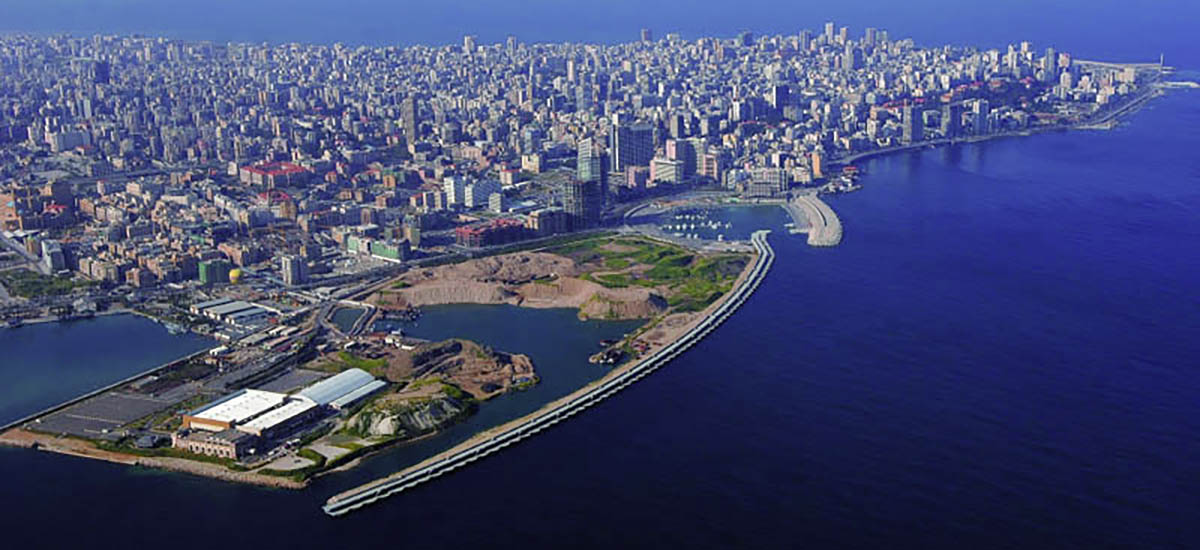
‘I found it dirty and coarse,’ the Lebanese scholar Edward Atiyah wrote of Beirut at the end of the First World War. ‘Rubbish heaps stank in the streets; the gutters looked as though they hadn’t been cleaned since my childhood … Dead rats!’ Nearly a century later, in 2004, the journalist Hazim Saghie would say of Beirut in the 1980s: ‘I only recall darkness … the roar of electricity generators … while the garbage was mounting everywhere, spreading its putrid smell day after day after day.’
Both Atiyah and Saghie were remembering a dark past at a moment when prospects looked brighter. Atiyah was writing in 1946, as the French army was departing from newly independent Lebanon; Saghie in the early 2000s when Beirut was being rebuilt after fifteen years of civil war. Both imagined the worst was over, when it wasn’t, when it wasn’t likely to be. Now, in 2023, the rubbish is back and has been for several years. Political stasis and corruption have consigned Beirut to another dark age. A future in which any Lebanese can reflect on bad memories from a time of safety seems unimaginable.
Continue reading →