Tag Archives: The New York Review of Books

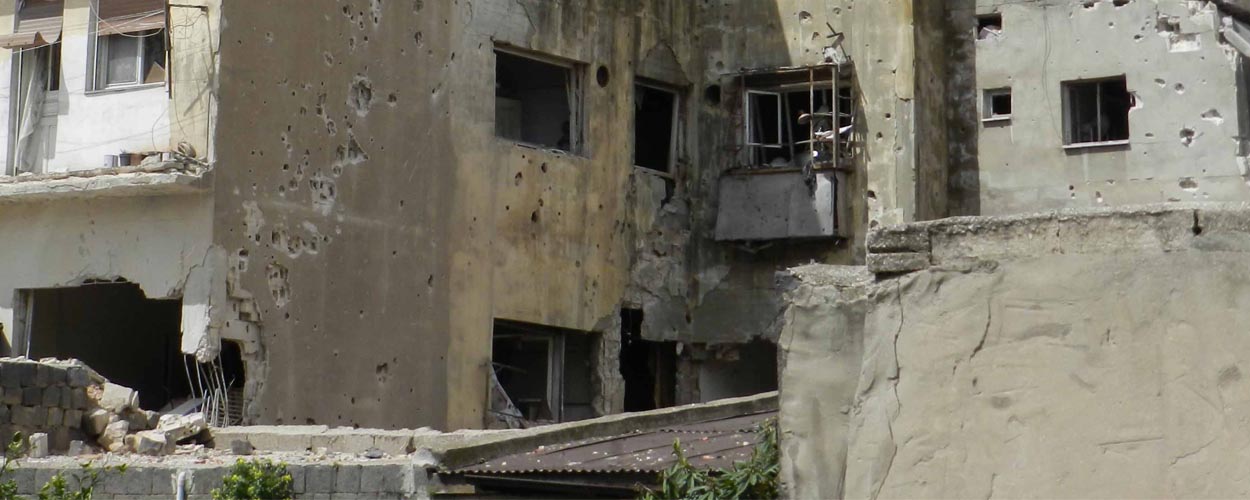
Aftermath of IDF strike on Bachoura 2024

Lebanon’s Year of Living Ambiguously

After the Hezbollah leader Sheikh Hassan Nasrallah decided to draw Lebanon into the Israeli-Palestinian conflict, tit-for-tat bombings along the border with Israel overshadowed the country’s political and economic plight.

Italo Calvino’s Invisible Cities describes the imaginary Maurilia, whose inhabitants invite visitors “to examine some old postcards that show it as it used to be.” In return the visitors “must praise the postcard city and prefer it to the present one.” The “lost grace” of Maurilia approximates Beirut’s, which likewise “can be appreciated only…in the old postcards.” It is with nostalgic regret that from time to time I examine postcards in the decaying souvenir shops of Beirut’s once-fashionable Hamra district. They depict, in sepia and color-tint, Ottoman mansions, lush gardens, venerable covered souks, a seafront promenade, ancient mosques, churches and synagogues, Roman columns amid metropolitan chaos, and a magnificent central plaza originally named the Place des Canons. After World War I, it was renamed the Place des Martyrs to honor the nationalist partisans whom the Turkish military governor, General Ahmed Jamal Pasha, hanged there in 1916 for defying his crumbling empire.

Continue reading →
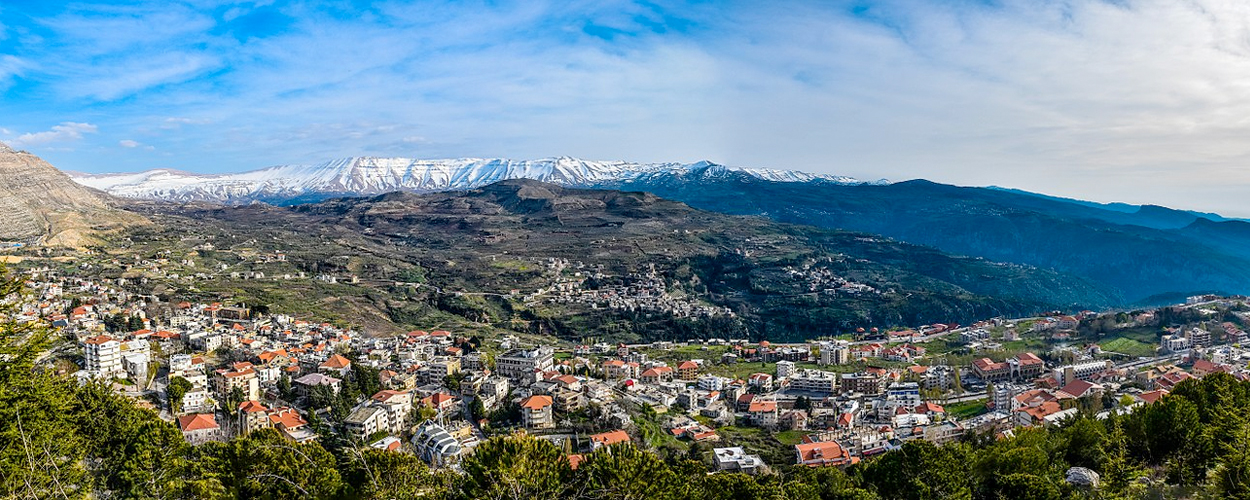
Village of Ehden, North of Lebanon by Paul Saad

Letter from Mount Lebanon

Peace is precarious in Lebanon, where everyone remembers the toll of previous conflicts and fears the spread of war.

Ehden is an ancient village on the northern heights of Mount Lebanon. Perched above the Qadisha (Sacred) Valley, it has long been a redoubt of the Maronite sect, an Eastern rite of Roman Catholicism whose adherents built their first church, Saint Mamas, here in 749 AD. Some Maronites like to claim descent from the Phoenicians, although their fourth-century founder, Saint Maroun, was born in northern Syria and never set foot in Lebanon. The people of Ehden and Zgharta, its sister village in the foothills nearer the sea, spoke Aramaic into the nineteenth century. Even today their Arabic is pronounced with a distinctive Aramaic accent. Most Lebanese, including urban Maronites, regard them as hillbillies whose feuds would embarrass the Hatfields and McCoys. Five families—Frangieh, Moawad, Doueihy, Karam, and Makary—have vied for dominance over the centuries. The Frangiehs have been primus inter pares since one of them, Suleiman Frangieh, became president of Lebanon in 1970.

My Makary grandmother raised me on mountain folktales. In one, her father is killed defending the village from an Ottoman raid about 1890, a few months before she was born. Other relatives told me he died in a feud among the families. Although her mother married again and took her to the New World, she never lost touch with her native land. Her Arabic—like her cooking—marked her as a born-and-bred Zghartawi.

Continue reading →
Damascus Qanawat market street byDosseman, CC BY-SA 4.0 , via Wikimedia Commons

Disenchantment and Devastation in Syria

For the first time in sixteen years Damascus has inaugurated a new five-star luxury hotel. The Golden Mazzeh is a ten-story reminder that some Syrians are surviving America’s economic sanctions better than others. Its 111 suites and rooms, ten restaurants and bars, two outdoor swimming pools, ballroom, meeting rooms, theater, gym, and conference center make it a formidable competitor to the older Sheraton and Four Seasons. Guests can sip martinis in its two rooftop bars while contemplating a 360-degree panorama of the sprawling Syrian capital: suburban apartment complexes and parks to the west, Mount Qasioun to the north, and to the east the ancient walled city where Saint Paul eluded his persecutors and which tradition says the Prophet Muhammad bypassed in the belief that man could enter paradise only once. An Italian architect, Massimo Rodighiero, designed the hotel, whose manager, Patrick Prudhomme, is French. In the eucalyptus-shaded public garden across from the entrance, mothers watch their children as traffic rumbles along the nearby Mazzeh Highway toward Beirut.

This is the road that first delivered me to Damascus at Easter 1973, before high-rise government offices, embassies, and apartments for a new class of military officers, civil servants, and merchants absorbed semirural, suburban Mazzeh into the metropolis. I was a tourist then, an ignorant American graduate student on his way by land from Lebanon to Aqaba in Jordan, pausing long enough for lunch and a little sightseeing. When I returned the following October to cover the war with Israel, it was as a journalist on a visa approved by the Ministry of Information’s obstructive, sluggish bureaucracy. Since then I’ve had to apply to the ministry whenever I sought to return.

Continue reading →
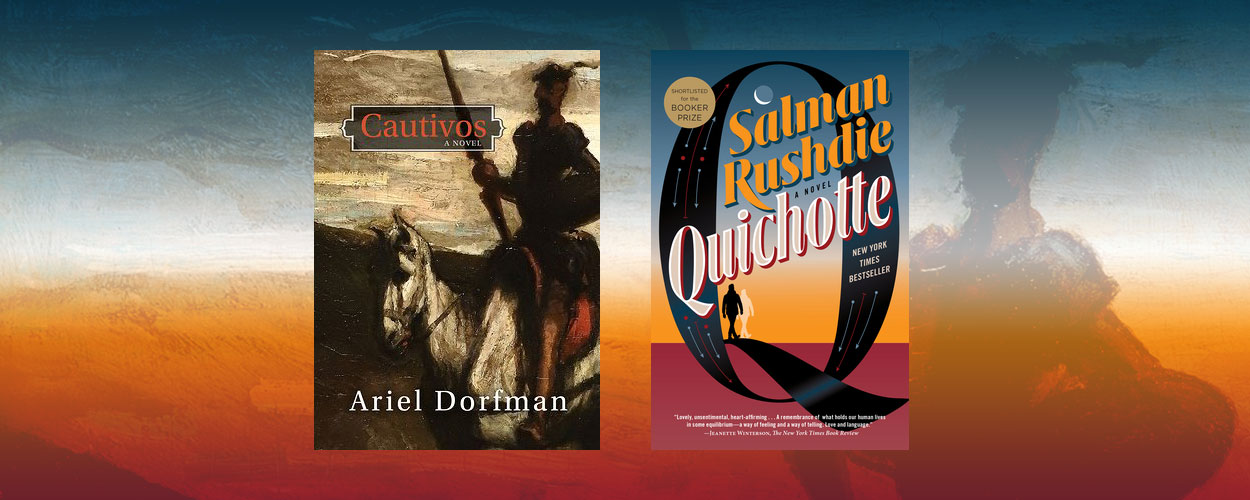
Cautivos & Quichotte

Anything Can Happen

Notions of authorship, creator, and creatures, as well as of love, folly, and imagination, dominate Salman Rushdie’s and Ariel Dorfman’s retellings of Don Quixote.

“I don’t think I understand what Don Quixote is about, and I don’t think anybody knows what Don Quixote is about.”—Keith Dewhurst, author of the play Don Quixote (1982)

Miguel de Cervantes concluded The Ingenious Hidalgo Don Quixote of La Mancha in 1605 with a phrase in Italian from Ariosto’s Orlando Furioso: “Forse altro canterà con miglior plettro” (Perhaps another will sing with a better [guitar] pick). While his book was selling in record numbers, Cervantes turned to short stories and pastoral poetry. In 1614 the pseudonymous Alonzo Fernández de Avellaneda published an unauthorized sequel to Don Quixote, prompting a furioso Cervantes to publish his own second volume of the novel a year later. Attributing its authorship, as he had that of volume 1, to the mythical Arab scholar Cid Hamet Benengeli, Cervantes exacted revenge. In chapter 70, devils battered the presumptuous Fernández’s manuscript with tennis rackets so “that the very insides flew out of it”:

Continue reading →
Khaled Khalifa. Photo Credit Aiham Dib

Scheherazade in a Syrian Cell

Khaled Khalifa is Syria’s biographer, much as Gore Vidal declared himself America’s. While Vidal gave fictional life to Aaron Burr, Abraham Lincoln, William Randolph Hearst, and other American deities, Khalifa avoids real names: no Assad, father or son, only “the President”; no Baath, only “the Party”; Alawis are “the other sect,” Sunnis “our sect.” Yet their presence dominates the lives of his imagined characters, as in the real Syria.

Known in the Arab world primarily as the author of scripts for television and film, the fifty-five-year-old Khalifa has published five novels in Arabic, three of which have been sensitively translated by Leri Price. The first to appear in English was In Praise of Hatred, a complicated García Márquez–like chronicle of an unnamed, decaying family with aristocratic pretensions enduring the clandestine war between security forces and Islamist militants that erupted in Aleppo in the late 1970s. With its labyrinthine souks, decrepit stone palaces, medieval monuments, and heterogeneous populace, Aleppo serves as an apt setting for In Praise of Hatred’s unraveling mystery…

Continue reading →
Destruction in Homs

Syria: A Savage Peace

Workmen throughout Syria are erecting bronze, stone, and concrete statues in what the government calls “liberated areas.” Some of the monuments are newly cast, while others have been in storage since the conflict began in 2011. At that time, protesters in rebellious cities like Dera’a and Homs were desecrating the sculptures of longtime president Hafez al-Assad, his successor Bashar, and Bashar’s older brother, Bassel, the designated heir who died before ascending the throne. It was perhaps an omen of the rebellion’s destiny that popular legend had a massive bust of Hafez in Idlib killing two demonstrators as it crashed to earth. Seven years on, the effigies, like the regime they embody, are back. The war isn’t over, but the postwar era has begun.

Outright victory remains elusive. The Syrian army controls about 60 percent of the land and 80 percent of the resident population of about 16.5 million people, leaving three sectors of the country yet to be “liberated”…

Continue reading →
Anti-government protest in Assi square of Hama

Syria’s New Normal

Mount Qasioun soars above the Damascus plain to a height of four thousand feet, a sheer escarpment that for millennia has borne witness to insurrection, invasion, siege, and annihilation. Mankind’s first, albeit legendary, murder occurred in Qasioun’s Cave of Blood, where Cain crushed his brother Abel’s skull with a stone. For many Jews, Christians, and Muslims, Abel became the original martyr, the prototype for millions who followed him into blameless death.

Cafés on the summit used to afford a vista of the sprawling metropolis below, until the government banned visitors lest they act as artillery spotters for the rebels. Damascus divided in 2011 into hostile strongholds of the state and its armed opponents. Six and a half years later, the government has restored its rule to all the areas visible from Qasioun, apart from two besieged, nearly leveled, corners, one along the city’s eastern fringe and the other in a tiny pocket to the south. Occasional artillery and mortar rounds testify to the insurgents’ stubborn survival, but the rebellion no longer threatens the rule of Syrian President Bashar al-Assad. The postwar era has begun.

“The regime stays,” one diplomat in Damascus told me. “That’s it. The time of regime change is over.” Terms such as “regime change” and “transition” have for the most part disappeared from political discourse. The government is establishing a new normal. Electricity has been restored from a few hours to twenty-four most days. Water flows from the taps, the garbage is collected, and taxi drivers moan about traffic. Brides in white chiffon sway and ululate as they ride in open convertibles to their wedding parties. Far from Damascus, only a few zones of rural Syria elude the government’s grasp: Idlib in the northwest, two areas adjoining the Jordanian and Israeli borders in the south, the Kurdish-held desert beside Iraq in the east, and a small enclave between Idlib and the Turkish border.

Continue reading →

In the Horrorscape of Aleppo

Dawn breaks to a daily chorus of artillery and mortar fire in two of humanity’s most ancient settlements that today are Syria’s two largest cities, Damascus and Aleppo. Projectiles rain on their rural peripheries, where opposition groups still fighting the regime of President Bashar al-Assad shelter in tunnels below mountains of rubble. Muezzins wake the faithful to prayer, and warplanes deliver the day’s first payloads just after 5:00 AM. The rebels respond with desultory mortar rounds fired at cities they once dreamed of ruling. In Damascus, their shells explode in the Christian neighborhoods closest to the eastern front lines. In Aleppo, artillery batters opposition bases along the western frontier with Idlib province. Both cities’ exhausted citizens have cause to fear for their country’s uncertain future.

I happened to arrive in Damascus, after an interval of four months, on March 19—a few hours after insurgents launched a large-scale assault to break into the city from the eastern suburbs. They emerged from underground caves, smashed through army checkpoints with suicide bomb vehicles, and seized buildings between two besieged districts, Jobar and Qaboun. This happened within sight of the Christian neighborhoods surrounding Abaseen Square. It took the army more than a day to drive them back. Some Damascenes doubted their government’s ability to defend them, and many feared a massacre of minorities. When the battle ended, the lines were back where they had been. The regular pattern of artillery exchanges and aerial sorties resumed. Citizens continued what passed for normal life in wartime, going to work and school to the sounds of violence on the outskirts.

Inside the walls of the old city, the narrow streets around my Ottoman-era hotel sounded like a steel mill. First came the heavy presses, pounding up and down, metal smashing metal, shaking the ground: outgoing artillery from the border separating the old city from Jobar. Then the rumble of turbines, furnace doors screeching open, and flames gushing forth: Syrian air force planes soaring low over the no-man’s-land between the old city and Jobar to strike tunnels and mortar launchers. Finally the staccato of jackhammers breaking ground with relentless fury: jeep-mounted .45-caliber heavy machine guns and old Dushka 12.7- millimeter antiaircraft weapons. Occasionally, something like a compressor rumbled the houses of the old city and splattered shards into the walls: mortar rounds from Jobar, the response of weakened warriors repaying their enemies for keeping them down.

At breakfast one morning, the hotel roof rattled as if a ton of lead had fallen on it. I was about to seek cover, when I looked up. Two cats were fighting on the roof, whose clear plastic sheeting amplified their footsteps. The war seemed to affect even the animal population.

A friend of mine, who has longed for a change of regime since the March 2011 protests in Daraa sparked the conflict, has abandoned hope. “I don’t care how they end it,” he said, “just so they end it.” Ending it was already difficult, but the early April chemical attack that killed more than eighty civilians in Khan Shaykhun, a rebel-held village in Idlib province in the country’s northwest, and the American missile strike on Syria’s Shayrat airfield in retaliation are rendering the difficult impossible.

Continue reading →