Tag Archives: Times Literary Supplement

Taliban Fighters and Truck in Kabul, August 17, 2021

Imperial graveyard: the sufferings of Afghanistan, and of those who invade it

Afghans may wonder why foreigners repeatedly invade their country before, invariably, scrambling for the exit. In 1842, the massacre of a retreating British army that had conquered the country four years earlier should have prevented Britain from trying – and failing – twice more, in 1878 and 1919. Next came the Soviet Union. Its triumphant conquest of 1979 ended ten years later in humiliation. The “exceptionalism” of the US proved less than exceptional in 2021, when its armed forces, having lingered for a record two decades, departed in such a hurry that they left thousands of their local collaborators behind. Despite the expenditure of $1 trillion and the loss of 2,311 American and an estimated 95,000 Afghan lives, America’s long-term impact was as negligible as Britain’s and Russia’s. Soon, it will be China’s turn. If Xi Jinping goes for it, my money is on the Afghans.

Jon Lee Anderson, whose excellent New Yorker frontline dispatches are collected in To Lose a War, sympathizes with the Afghans’ predicament. They owe their woes not only to foreigners, but to homegrown warriors:

“In a forty-five-year period, they have lived through a decades-long Russian military occupation followed by a police state dictatorship followed by a bloody civil war followed by a six-year Taliban tyranny followed by twenty years of a western-leaning quasi-democracy, only to revert to Taliban control.”

Continue reading →

The expendables

Forty-one-year-old Police Constable Trevor Lock was at his usual post, guarding the Iranian embassy in London, on the morning of April 30, 1980. At 11.36 he noticed a young man whom he took to be “another Iranian student” approaching the building. “Then”, writes Ben Macintyre, “he saw the sub-machine gun.”

The “student” fired a round that shattered the half-open glass security door and lacerated PC Lock’s face. Joined by two other armed men, he rushed inside, and soon three more armed confederates arrived. Thus begins Macintyre’s perfectly paced and thrilling account of the six-day standoff between the British government and young zealots seeking justice for their fellow Arabs in the Iranian province that they called Arabistan and Persians knew as Khuzestan. Thirty-one people – diplomats, local staff, journalists and visa applicants – were in the building when the gang began rounding them up and threatening their lives. Five managed to escape in the initial confusion, leaving twenty-six as hostages to be bargained against ninety-one political prisoners in Iran. The new Islamic government in Iran refused to consider making concessions, and Margaret Thatcher’s year-old administration would not grant the terrorists safe passage out of the country with their hostages.

Continue reading →
Abd al-Qadir protecting Christians in Damascus by Jan-Baptist Huysmans, 1861

From the ashes: a ground-breaking account of an underexamined horror

Armed gangs of men and boys rampaged through the Christian Quarter of Damascus for eight days and nights in July 1860, burning, looting, raping and murdering. Colonel Charles Henry Churchill, who had served as vice-consul in Damascus before taking up permanent residence in Mount Lebanon, recorded multiple atrocities:

The violation of women, the ravishing of young girls – some in the very streets amid coarse laughs and savage jeers, – some snatched up and carried off … Men of all ages from the boy to the old man, were forced to apostasise, were circumcised, on the spot, in derision, and then put to death. The churches and convents, which, in the first paroxysm of terror, had been filled to suffocation, presented piles of corpses, mixed up promiscuously with the wounded and only half dead; whose last agonies were amidst flaming beams and calcinated blocks of stone falling in upon them with earthquake shock. The thoroughfares were choked with the slain.

The orgy of violence petered out on July 17, leaving more than 5,000 Christians dead and their neighbourhoods reduced to ash. Survivors crammed into the uncertain protection of the city’s ancient citadel, while Muslim toughs outside the walls bayed for their deaths.

Most histories of the Damascus “events” portray them as merely the aftermath of Druze massacres of as many as 20,000 Christians in Mount Lebanon the previous spring. The American-born Oxford historian Eugene Rogan’s original and thoroughly researched history demonstrates that the massacres, while related, had similar but separate causes. His fascination with the history began, as so often with good historians, while he was looking for something else.

Continue reading →
Activists supporting Julian Assange in London's Piccadilly Circus with banners declaring 'Free Assange' and '2023 - Time to Set Him Free!'

Behind closed doors: A fresh look at Julian Assange and WikiLeaks

In December 2018, the United Nations special rapporteur on torture, Nils Melzer, received an email from a group of lawyers headed “Julian Assange is seeking your protection”. Melzer, a Swiss international lawyer, asked himself: “Was this not the founder of WikiLeaks, the shady hacker with the white hair and the leather jacket who was hiding out in an embassy somewhere because of rape allegations?” As he recalls,

I was overtaken by a host of disparaging thoughts and almost reflexive feelings of rejection. Assange? No, I certainly would not be manipulated by this guy.

Three months later, Assange’s legal team contacted him again. Ecuador intended to expel Assange from its embassy in London, where he had taken refuge in 2012 to avoid extradition to Sweden and from there to the US. “A question started forming in my mind”, Melzer writes in The Trial of Julian Assange: A story of persecution. “Had I overlooked something when I dismissed this case the last time around?” Thus began a two-year investigation that uncovered the lengths to which the US – and the UK, Sweden and Ecuador – went to silence and punish Assange. Melzer changed his mind. This book should change others’.

The story begins in 2006, when Assange, together with fellow tech prodigies and free-speech advocates, founded WikiLeaks as a safe depository for inside sources to reveal wrongdoing without fear of retribution. Encryption prevented governments and corporations, not to mention WikiLeaks itself, from detecting the identities of whistleblowers, thereby protecting them from prosecutions of the kind that tormented many who had confided in traditional media, among them the Foreign and Commonwealth Office official Sarah Tisdall, who was jailed in 1984 for leaking British government documents to the Guardian, and the GCHQ translator Katharine Gun, who in 2003 was charged under the Official Secrets Act for leaking top-secret information to the Observer. A year into its existence, WikiLeaks published the US army’s protocols for detainee treatment at Camp Delta in Guantánamo Bay, Cuba, including the denial of access to Red Cross delegates. It also released documents related to the ruling Moi family’s corruption in Kenya. In 2008 came the Republican vice-presidential candidate Sarah Palin’s emails, then in 2009 intercepts of government pager messages about the attacks on New York and Washington in September 2001. It was a measure of the trust sources placed in WikiLeaks that so many were…

Continue reading →
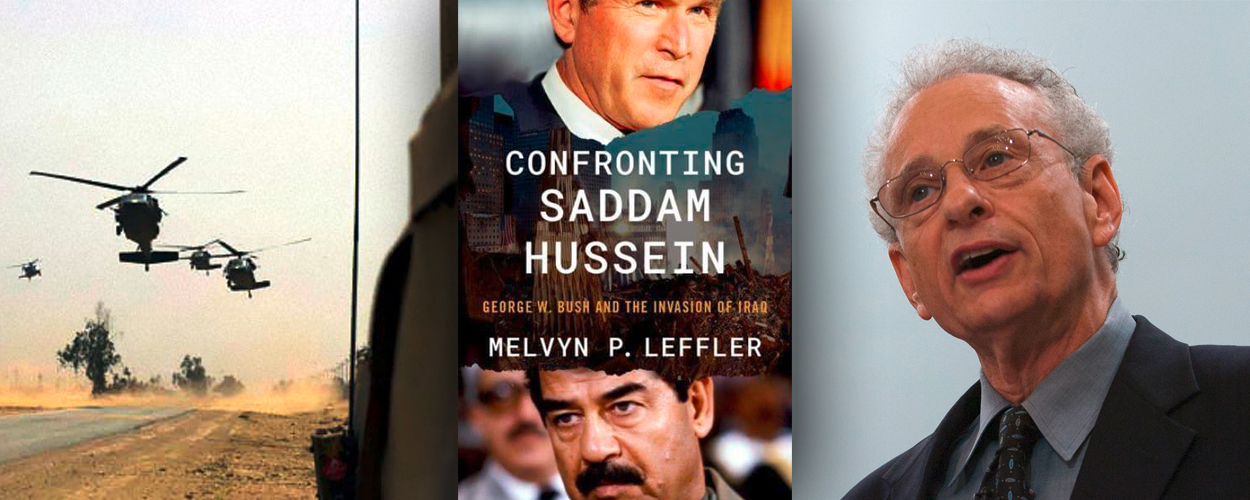
Confronting Saddam Hussein by Melvyn P. Leffler review

An apologist seeks to justify an ‘abomination of a war’

In 1899 President William McKinley explained to a delegation of Methodist clergymen why he had decided to occupy the Philippine Islands. Conscience prevented him from returning the archipelago to Spain following the Spanish–American war, turning it over to another colonial power or granting the Filipinos independence, because “they were unfit for self-government”. A long night of prayer had convinced him “that there was nothing for us to do but to take them all, and to educate the Filipinos, and uplift and civilize and Christianize them”. The churchmen accepted McKinley’s rationale. The Filipinos, about 90 per cent of whom were Christian already, did not. Nor did Mark Twain, who condemned the military onslaught that would go on to kill 20,000 rebels and up to 200,000 civilians. History has judged McKinley harshly, despite the domestic popularity that won him a second election to the White House in 1900.

Like McKinley, George W. Bush professed a moral imperative for invading and occupying Iraq in 2003. He too won re-election. Yet by the time he left office he was a laughing stock. Even his most ardent cheerleaders had distanced themselves from a military adventure that was nothing short of disastrous for Iraq, the US military and America’s global reputation. A rare exception is Melvyn P. Leffler, whose Confronting Saddam Hussein exonerates Bush and goes so far as to praise his “energy, discipline, self-confidence and good humor”. Can this be the same president who gave his name to the word “Bushism”, which the New Oxford American Dictionary defines as “a verbal error made by and considered characteristic of former US president George W. Bush”, eg “They misunderestimated me” or, on the Taliban, “They have no disregard for human life”?

Continue reading →
The Fate of Abraham by Peter Oborne

The West’s scapegoats: the long history of Islamophobia

The journalist Peter Oborne once cherished a faith in British rectitude. His columns for publications including the Daily Telegraph and the Spectator marked him out as one of conservatism’s more erudite spokesmen. Then came Britain’s complicity in the invasion of Iraq – broadly supported by both Labour and the Conservatives – and the Labour government’s mendacity over the death in suspicious circumstances of its scientific adviser David Kelly. The double deception prompted him to renounce his beliefs: “I went mentally into opposition to the British state”.

In The Fate of Abraham he turns his attention to some victims of the system he has rejected: Muslims in Britain and abroad. Western civilization’s apologists divided Muslims into the “good”, who collaborated with the imperial project, and the “bad”, who resisted. As a religion with adherents spanning the globe, Islam could be targeted as a disruptive force in the Philippines in the same terms used to deride Muslims opposed to the royal family in Saudi Arabia or military regimes in Egypt. In this sense Muslims assume the role of communists during the Cold War: the enemy without and within. Oborne argues that the Cold War model is both wrong-headed and harmful.

Continue reading →
Review of Sensing Injustice Michael E. Tigar

Prestige and honor: the legal life of Michael Tigar

In 1920, Clarence Darrow, America’s great “defender of the damned”, told a Chicago jury, in defence of freedom of speech: “You can only protect your liberties in this world by protecting the other man’s freedom. You can only be free if I am free”. Michael Tigar, in this account of his fifty years of legal practice, does not quote Darrow’s famous maxim, but he has surely lived by it.

After graduating first in his class at the University of California Berkeley School of Law in 1966, he embarked on a legal odyssey to defend victims of state persecution, from the free speech activists at Berkeley to the Chagos islanders displaced to make way for the American naval base on Diego Garcia. On the way, he represented nearly every American dissident whose name appeared on the FBI and CIA wanted lists. Despite the injustices Tigar witnessed, he retains his faith in American jurisprudence.

This memoir is also a modern history of American legal practice. In Tigar’s world there is no substitute for hard work, lengthy research of law and precedent, understanding the psychology of judges and juries, and putting the client first in all cases. For most of his career this has worked, though one of his regrets is that the government continues to use illegal electronic surveillance, despite statutes and judicial prohibitions against the practice. He has argued seven cases before the Supreme Court, and the reasoning in his briefs made their way into judicial history. He has taught law in California, Texas and elsewhere, assisted on cases in Africa and Israel, and written plays, including one about Clarence Darrow. Tigar is not self-effacing, admitting that one of his students wrote in an assessment that his ego was “as big as the Asian continent”.

Sensing Injustice is an adventure tale that makes the law seem as fascinating as any saga. Supreme Court Justice William O. Douglas wrote that Clarence Darrow, “working through the law, brought prestige and honor to it during a long era of intolerance”. The same can be said of Michael Tigar…

Continue reading →

Too late to be lucky

December 7 was the anniversary of the Japanese attack on Pearl Harbor in 1941 and of the birth thirteen years earlier of Noam Chomsky. Pearl Harbor led to American global dominance at the same time as Chomsky’s insights into the nature of language were beginning to have an impact on linguistic theory, philosophy and psychology. Chomsky is also an outspoken critic of his country’s foreign policy. Expanding his critique of B. F. Skinner’s and W. V. O. Quine’s behaviourist determinism to the political realm, he has developed a libertarian and socialist vision of free will, opposition to concentrations of private and state power, and resistance to the abuse of power at home and abroad.

Throughout his adult life, from his moral opposition to America’s invasion of Vietnam to his country’s more recent adventures in Afghanistan and Iraq, Chomsky has argued that the US behaves much as its Spanish, British and French imperial predecessors once did. Moreover, he notes, the US has employed the same moral language to cover what appear to be global atrocities. Like Marlow in Heart of Darkness, he believes, “The conquest of the earth, which mostly means the taking it away from those who have a different complexion or slightly flatter noses than ourselves, is not a pretty thing when you look into it too much”. Those Chomsky has consistently condemned must feel that he has looked into it too damned much…

Continue reading →

Print, the legend – The life of an American newspaperman

“Hold the front page!” Editors have no doubt shouted those fabled words more often for Seymour Hersh than for any reporter living. Hersh – known to friends and colleagues as “Sy” – is a legend of my trade, born appropriately in that great newspaper town, Chicago, scene of sufficient political corruption and police brutality to sustain a dozen dailies. From his exposure of the My Lai massacre in 1969 and other war crimes by American forces in Vietnam to his recent accounts of official disinformation about Syria, Hersh broke from the pack to tell tales most of his colleagues avoided but which the public needed to know.

What a story. What a life. It’s hard to read this book without a tinge of envy and a lot of admiration for a poor kid from the South Side who watched friends go off to Harvard in the 1950s while he stayed to support his Polish-Jewish mother by running his late father’s dry cleaners. When his twin brother Allan finished his PhD and brought their mother to San Diego, Sy took an English degree and went to the University of California’s law school. Having been expelled for indolence, he got a job with the City News Bureau in Chicago, the windy city’s equivalent of Britain’s Press Association, where he learn the trade. The morning editor made young Hersh scrub his desk, and his beat involved reporting high school basketball scores. “Nonetheless,” he writes, “I was smitten.” Having been drafted into the army for six months of Stateside training in 1960, he returned to work on a suburban weekly, got fed up working for people he did not respect – a recurring theme in his career – and started the rival paper Evergreen park/Oak Lawn Dispatch with a few friends. “My idea of a solid story then was one that found a way to praise an advertiser”, Hersh admits.

Continue reading →

Operation Enduring Operation

Benito Mussolini might have been speaking about the Afghans when he said of his countrymen, “It’s not impossible to govern Italians, it’s useless”. British, Russian and American efforts to impose effective rule over Afghanistan’s plains have brought only devastation to both governors and governed. Yet the Americans, despite a formal end to combat operations, persist in the Sisyphean struggle to bring their version of stability to the country.

Joshua Partlow, who covered the American war in Afghanistan for the Washington Post, has produced a book that is a cut above the usual journalistic fare of “I watched in horror as …”. The author is as sensitive to Afghan culture and history as he is to the difficulties faced by bewildered fellow Americans who have been thrust into a society they do not understand. This well-written investigation navigates the poisonous relationship between the United States and its ostensible client family, the Karzais, with sympathy for both.

Continue reading →