Category Archives: lebanon

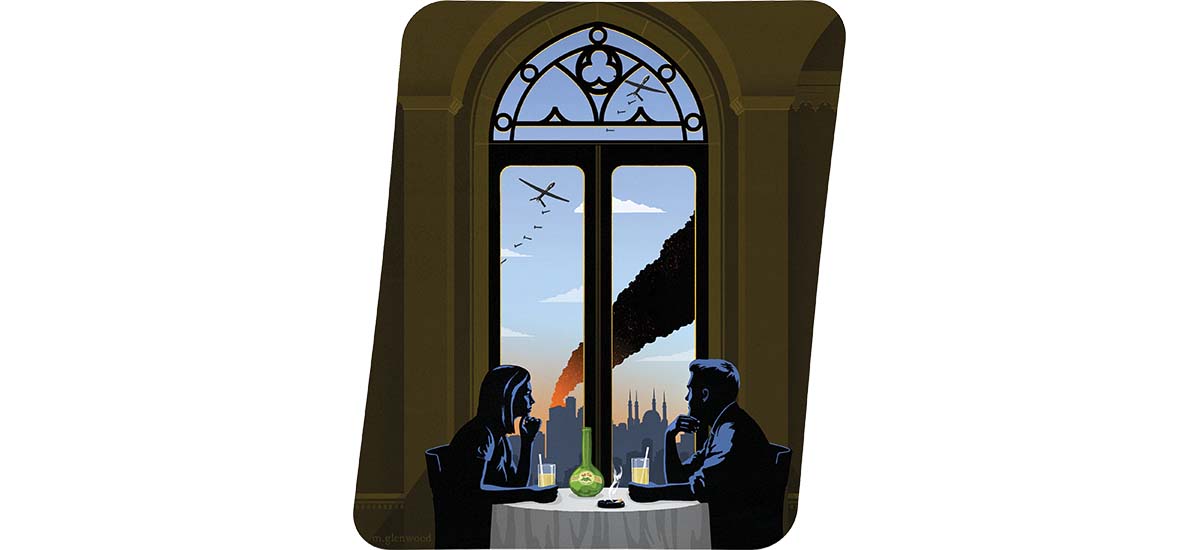
Illustration by M Glenwood for Alta

Letter from Beirut: A Stubborn Indifference to War

| 30th September 2026

This city keeps you on your toes, as long as you hang on to them. When you walk across a one-way street, look both ways. No driver—on a motorcycle or in an SUV—hesitates to charge the wrong way up a road clearly signed for traffic to go in the opposite direction. When two cars meet head-on, the driver going the wrong way shouts abuse at the innocent one obeying the rules. Welcome to Beirut.

This insouciant behavior reflects the near-unanimous contempt for law—in a country whose politicians illegally enrich themselves—of a populace with an indomitable will to enjoy life despite decades of violence. Since 1975, wars have caused unfathomable destruction while somehow allowing much of the city to survive. The ruination continues today courtesy of Israeli warplanes, rockets, and drones that demolish apartment complexes, mosques, hospitals, schools, and hotels.

“Do you remember what Lebanon was like before Iran and Hezbollah turned it into a nightmare?” Israeli prime minister Benjamin Netanyahu asked the Lebanese in a video message in June. “Remember the cafés? Remember the culture? Remember the calm? All that’s gone because Hezbollah and Iran want to drag us into war over and over and over again.” It’s easy to recall the cafés and the culture, though, because both are thriving. Even the so-called Hezbollah stronghold in Dahieh, in suburban southwest Beirut, comes alive between Israeli sorties, when residents rush to clear some of the wreckage and reopen cafés and shops.

Continue reading →
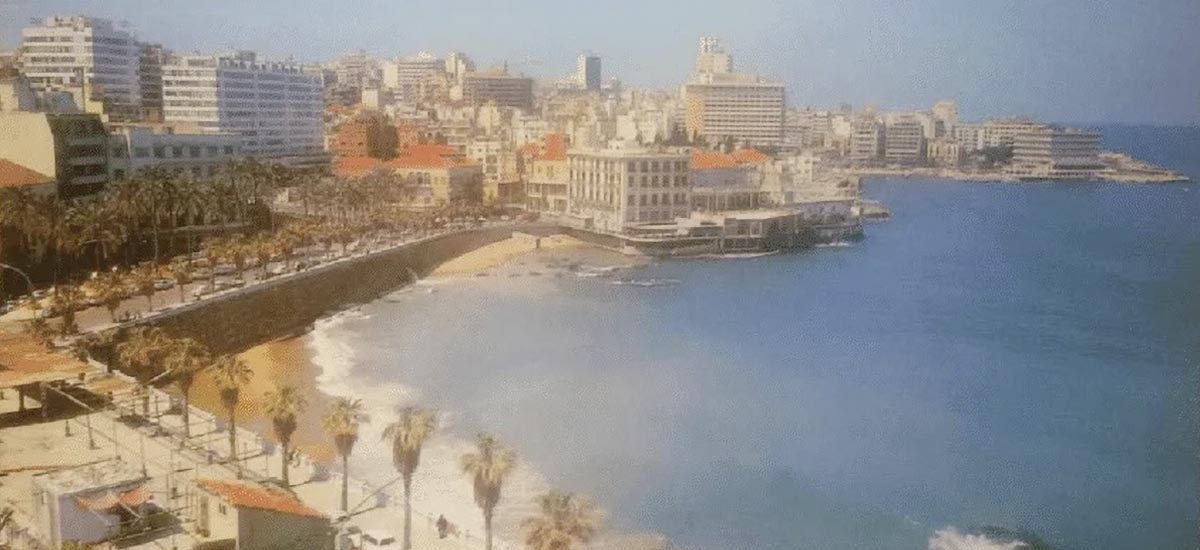
Avenue Francais, 1970's; Picture showing the two bays of Zaytouni and Saint Georges; New Royal Hotel in the foreground, and the Saint Georges Hotel in the Background occupying the tips of the bays

Beirut, Now and Then

On Wednesday​ , 8 April, Israel expanded its kill zone beyond what had been known as the ‘safe’ areas north of Beirut’s suburban south. I talked to a doctor at the American University Hospital who told me his emergency room was treating four hundred patients wounded in the bombing. Four had died. I passed the hospital, where families outside were waiting for the medical staff’s reports. By the evening, the Health Ministry put the death toll at 182, already a day’s record for the round of fighting that began on 2 March, later raising the total to more than three hundred. Among the dead was a young man who worked in the Thai restaurant round the corner from my house. His family, like so many others, is in mourning. The last five weeks of Israel-Hizbullah warfare have produced more than five thousand Lebanese casualties.

When I walked home from dinner at the end of this worst day in this latest war, our western half of the city looked pretty much as it does in periods of peace: cafés filled with families having coffee or ice cream, shops open and brightly lit, boys kicking footballs on forecourts, bins overflowing with rubbish, babies in pushchairs rolled along broken pavements, music blaring from bars and men lugging plastic bags of groceries from Spinneys supermarket. It had been a long day of fear, not knowing where the Israeli jets would strike next.

I went home to sleep, but that wasn’t the way my days in troubled times here used to end. When war kicked off in Lebanon in 1975, the foreign press corps congregated on most evenings in the bar of the Hotel Saint Georges. Over the barman Ali Bitar’s martinis and other concoctions, we compared impressions of our daylight excursions to the fluctuating frontiers between Beirut’s mutually hostile neighbourhoods. Our dispatches filed by telex, we relaxed in leather armchairs, well out of mortar range, or so we imagined, and took counsel from the impeccable concierge, Mansour Breidy. We also garnered what gossip we could from politicians, bankers, arms dealers and oilmen. It was a rare correspondent who turned up in anything less than jacket and tie. We took consolation in the calming panorama of Saint George Bay and talked ourselves into somnolence in preparation for the morning’s savagery.

Continue reading →
Beirut bombing 2024

Beirut Gets a Reprieve—but for How Long?

If history is any guide, the latest Lebanese ceasefire may well have broken down by the time you read this.

Whenever I hear the word “ceasefire” about Lebanon, I reach for my stopwatch. During the first phase of the civil war there, in 1975–76, we would give numbers to each successive ceasefire. Our tally ran out of steam after 100.

Each time, something—a Christian boy dating a Muslim boy’s sister, a car theft, a drug deal gone wrong, flying a party flag in the wrong neighborhood—would kick-start a fresh wave of violence. One of Beirut’s early front lines was a street between Christian and Muslim neighborhoods. Western journalists—of whom I, as a young stringer for various publications and radio networks, was barely one—left the St. George Hotel bar long enough to observe exchanges of fire, pick up a few quotes, gather some color, and file in time for dinner. Then we would wait for the next ceasefire.

The fighting escalated with the introduction of artillery and snipers, whose favored targets seemed to be women and children. There was a period when the violence paused at the end of each month. It took us a while to realize why: It was payday for the militiamen, who held their fire long enough for the banks to reopen. Checks cashed, they started firing again. I am not making this up.

Lebanon’s war has taken many forms since then: Israel against the Palestine Liberation Organization; Maronites against other Maronites; Maronites versus Druze; a faction of the Lebanese Army against the Syrian Army; the Shiite Amal militia against the Palestinians; Israel versus Syria; and the recurring conflict between Israel and Hezbollah. The one constant is the ceasefire: a false promise of peace that gives the belligerents a chance to regroup and rearm.

Continue reading →
Aftermath of IDF strike on Bachoura 2024

Lebanon’s Year of Living Ambiguously

After the Hezbollah leader Sheikh Hassan Nasrallah decided to draw Lebanon into the Israeli-Palestinian conflict, tit-for-tat bombings along the border with Israel overshadowed the country’s political and economic plight.

Italo Calvino’s Invisible Cities describes the imaginary Maurilia, whose inhabitants invite visitors “to examine some old postcards that show it as it used to be.” In return the visitors “must praise the postcard city and prefer it to the present one.” The “lost grace” of Maurilia approximates Beirut’s, which likewise “can be appreciated only…in the old postcards.” It is with nostalgic regret that from time to time I examine postcards in the decaying souvenir shops of Beirut’s once-fashionable Hamra district. They depict, in sepia and color-tint, Ottoman mansions, lush gardens, venerable covered souks, a seafront promenade, ancient mosques, churches and synagogues, Roman columns amid metropolitan chaos, and a magnificent central plaza originally named the Place des Canons. After World War I, it was renamed the Place des Martyrs to honor the nationalist partisans whom the Turkish military governor, General Ahmed Jamal Pasha, hanged there in 1916 for defying his crumbling empire.

Continue reading →
IDF ground maneuver to Lebanon, 2024

In Lebanon, Israel Is Only Sowing the Seeds of More Bloodshed and Terror

The history of Israel’s incursions into Lebanon are a series of lessons in futility and the arrogance of power. If only anyone were paying attention.

The Kamal Adwan Hospital in northern Gaza is appealing for fuel to run its generators amid a siege and evacuation order by the Israeli military that threatens the lives of its patients, including more than a dozen children in the Intensive Care Unit. At the southern end of the Strip, the Mohammed Yusuf al-Najjar Hospital was forced to cease operating by Israeli military pressure—depriving Gaza of its only kidney dialysis unit. Elimination of hospitals has become a normal aspect of what the United Nations calls Israel’s “concerted policy to destroy Gaza’s healthcare system.” It is worth reflecting not only on the two hospitals’ fates but also on their names: Kamal Adwan and Mohammad Yusuf al-Najjar. They tie Gaza to Lebanon, where I was living on the night both of them were murdered.

Continue reading →
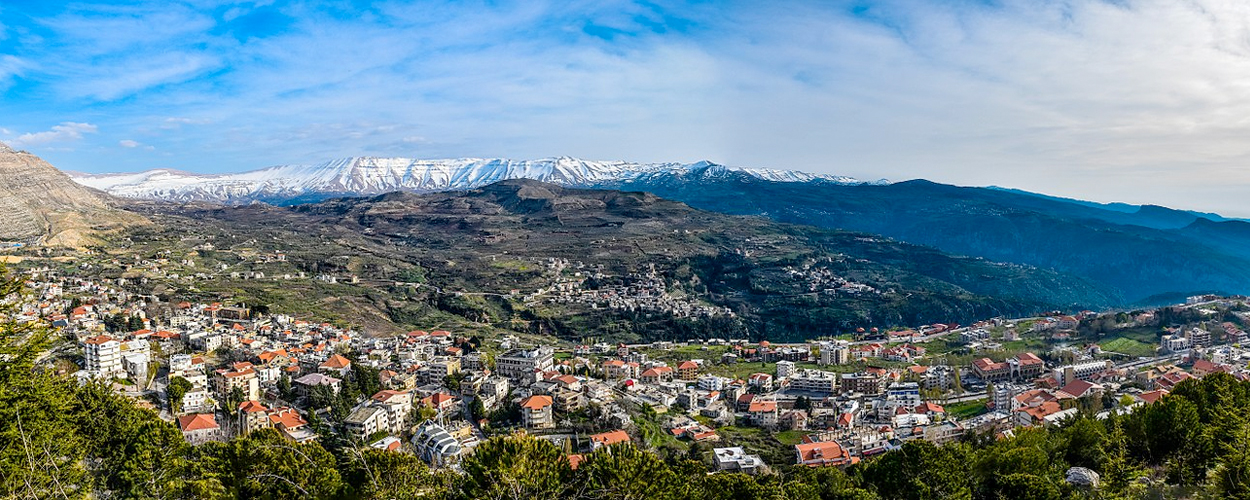
Village of Ehden, North of Lebanon by Paul Saad

Letter from Mount Lebanon

Peace is precarious in Lebanon, where everyone remembers the toll of previous conflicts and fears the spread of war.

Ehden is an ancient village on the northern heights of Mount Lebanon. Perched above the Qadisha (Sacred) Valley, it has long been a redoubt of the Maronite sect, an Eastern rite of Roman Catholicism whose adherents built their first church, Saint Mamas, here in 749 AD. Some Maronites like to claim descent from the Phoenicians, although their fourth-century founder, Saint Maroun, was born in northern Syria and never set foot in Lebanon. The people of Ehden and Zgharta, its sister village in the foothills nearer the sea, spoke Aramaic into the nineteenth century. Even today their Arabic is pronounced with a distinctive Aramaic accent. Most Lebanese, including urban Maronites, regard them as hillbillies whose feuds would embarrass the Hatfields and McCoys. Five families—Frangieh, Moawad, Doueihy, Karam, and Makary—have vied for dominance over the centuries. The Frangiehs have been primus inter pares since one of them, Suleiman Frangieh, became president of Lebanon in 1970.

My Makary grandmother raised me on mountain folktales. In one, her father is killed defending the village from an Ottoman raid about 1890, a few months before she was born. Other relatives told me he died in a feud among the families. Although her mother married again and took her to the New World, she never lost touch with her native land. Her Arabic—like her cooking—marked her as a born-and-bred Zghartawi.

Continue reading →
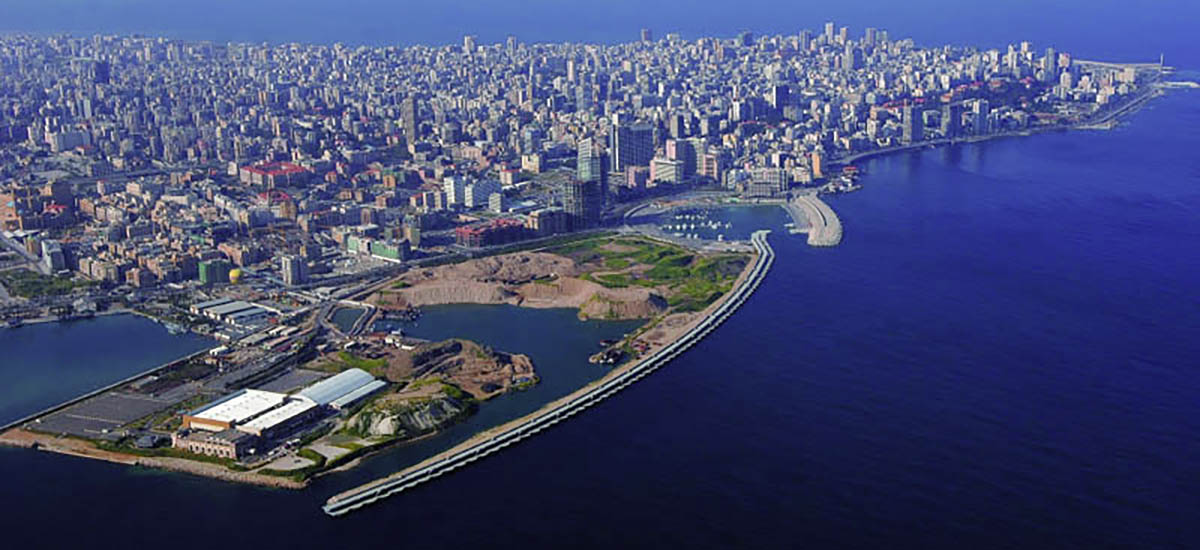
Beirut city by Yoniw

Diary: In Beirut

‘I found it dirty and coarse,’ the Lebanese scholar Edward Atiyah wrote of Beirut at the end of the First World War. ‘Rubbish heaps stank in the streets; the gutters looked as though they hadn’t been cleaned since my childhood … Dead rats!’ Nearly a century later, in 2004, the journalist Hazim Saghie would say of Beirut in the 1980s: ‘I only recall darkness … the roar of electricity generators … while the garbage was mounting everywhere, spreading its putrid smell day after day after day.’

Both Atiyah and Saghie were remembering a dark past at a moment when prospects looked brighter. Atiyah was writing in 1946, as the French army was departing from newly independent Lebanon; Saghie in the early 2000s when Beirut was being rebuilt after fifteen years of civil war. Both imagined the worst was over, when it wasn’t, when it wasn’t likely to be. Now, in 2023, the rubbish is back and has been for several years. Political stasis and corruption have consigned Beirut to another dark age. A future in which any Lebanese can reflect on bad memories from a time of safety seems unimaginable.

Continue reading →

With American Help, Lebanon Once Again Nears the Abyss

Lebanon needs change. The people demand it and even some of the leaders know it. But US involvement threatens that possibility.

“The switch from peace to a state of war,” wrote Lebanese novelist Hassan Daoud in 2006 when Israel was invading Lebanon, “is the fastest transition of all.” Lebanon, which managed to keep the Syrian war from spreading to its territory for eight years, is now bracing for another switch. More than a quarter of the population has descended on the streets in all large cities demanding an end to government corruption. Protesters from all the Christian and Muslim sects are blockading Parliament and major roads and denouncing government ministers as “thieves.” The prime minister has resigned, but no one has emerged to form a new government. Lebanon is teetering under popular dissent against a grotesquely crooked system and an $86 billion national debt (150 percent of GDP) that makes it the third-most-indebted nation on earth.

Continue reading →
Beirut City

Avoiding War in the Middle East Could Begin in Lebanon: A Scenario

Israel’s new government, whatever form it ultimately takes, can move toward ending one war right now without firing a shot. At a stroke, Israel only has to offer to withdraw from a mere 5,000 acres of scrub that U.N. mediator Terje Roed-Larsen once called “a worthless piece of land.” In this sequence of events, Israel’s war with Hezbollah, which has brought it nothing but grief since its 1982 invasion of Lebanon, would be over. And there would be a bonus for Israel: Iran would lose the strategic threat of thousands of Hezbollah rockets pointed at Israeli cities.

Deft diplomacy could then dismantle, one by one, other areas of confrontation between Iran and its adversaries — among them Iran’s nuclear program, the Yemen war and U.S. sanctions against Iran — that threaten to engulf the United States in a regional war.

Let me explain…

Continue reading →
Lebanese Elections 2018

Lebanon’s Election Ritual Repeats

Despite the topsy-turvy machinations of Lebanon’s elections May 6, the country’s voters awaited a more decisive verdict two days later from U.S. President Donald Trump. The Lebanese had no say in Trump’s election, but his decision to abrogate the 2015 Joint Comprehensive Plan of Action with Iran may seal their fate. In a confusing poll with a low turnout, voters gave a whopping number of seats to Iran’s Lebanese surrogate, Hezbollah, and its affiliated parties. To Iran, Saudi Arabia, Israel and the United States, Lebanon is little more than a venue for larger rivalries.

Lebanon, for all the headlines its troubles have earned it since 1975, is a small country without oil or mineral deposits. The weakness of small states often means that their elections don’t matter until people vote the wrong way and someone steps in, as President Woodrow Wilson did when invading Mexico in 1914 to “teach them to elect good men.” The Palestinians of Gaza learned the same lesson when they and Palestinians in the West Bank voted for Hamas on Jan. 25, 2006. The United States was so enraged that it backed a putsch by Hamas’ rival, Fatah, in Gaza in 2007 and, when that failed, supported Israel’s intensified blockade and several invasions of the territory beginning with Operation Cast Lead in 2008.

Continue reading →