Tag Archives: Stratfor

Brexit, Brexit Everywhere

I’ve just returned to Britain after many months away, and it’s as if I never left. When Rip Van Winkle woke up from his 20-year slumber, he encountered a world altered beyond recognition. The United Kingdom, however, is mired in the same debate that has raged for years over how and whether to sever its ties to the European Union. The fracas that dominated the airwaves, newspapers and public discussion a year, even two years, ago has not budged. The crisis is no nearer resolution than it was when a slim majority voted to leave the European Union in the referendum of June 2016. Spokespeople for the Brexit faction are still demanding that Parliament implement the people’s will, while their opponents warn that departure on any terms harms the country more than staying in. Both have a case, but nothing is moving.

The discussion should be reasoned and thoughtful, but it isn’t. Instead, Parliament is staging a show, asserting its authority over the executive as it hasn’t done since Tony Blair turned the House of Commons into a rubber stamp for his Labour government’s policies. The House of Commons has become a circus with Speaker John Bercow playing ringmaster to unruly clowns, wild beasts and high-wire acts. Only the Liberal Democrats are united on the issue, standing firmly to Remain, but they have only 11 seats in Parliament. Within the two major parties, loyalties have evaporated. Brexiteers and Remainers sit on both Labour and Conservative benches. Moreover, extreme Brexiteers are voting with extreme Remainers to block the terms for withdrawal that Prime Minister Theresa May negotiated with the other 27 members of the European Union. They don’t want to keep Britain in a European customs union, especially when it will have no say on its rules. The Remainers who voted against May don’t like her deal for the opposite reason: Its rejection, they believe, will force either a general election or a second referendum to reverse the outcome of the first. Add to that the confusion over whether the physical border between Northern Ireland and the Republic of Ireland should be restored and jeopardize peace in the north, and you have a free-for-all that no one predicted during the 2016 referendum campaign.

The bloodshed has spread from Parliament to the pubs and the peaceful homes that Englishmen ostensibly regard as their castles. My own family, which is fairly evenly divided, allowed passions to rise so high over Christmas that we banned the topic from the dinner table. The irrepressible Stanley Johnson, father of two Conservative members of parliament famed for their conflicting stances, told me his Christmas was more fraught. Son Jo had resigned as a government minister because he favors Europe, and older son Boris quit as foreign secretary to lead the Brexiteers against May. Each boy is adamant that his way is the only way. Stanley, as he was about to carve the turkey, asked his offspring, “Which is it to be, boys, breast or thigh?”…

Continue reading →
Free Austin Tice

The Enduring Search for a Missing American Journalist in Syria

Debra and Marc Tice left Beirut last week without their son. It was a disappointing, if unsurprising, end to their eighth trip to the Lebanese capital in the six years since Austin Tice, a freelance journalist and law student, vanished while covering the war in Syria. The Tices knocked on doors, hosted a press conference and applied for Syrian visas to plead for the Syrian government’s assistance in freeing their captive son. Their meetings in Beirut produced little more than sympathy, their dignified presentation to the press corps received minimal coverage and the Syrian government did not grant them visas.

Now, they anticipate their sixth Christmas at home in Houston without the eldest of their seven children. Austin Tice’s disappearance and prolonged captivity constitute a mystery that cries out for a solution. It began with his decision in 2012, just before the summer vacation preceding his final year at Georgetown University’s law school, to publicize the suffering of the Syrian people…

Continue reading →
Saudi Consulate doors Istanbul

Seeing Khashoggi’s Fate as a Death Foretold

The killing of Jamal Khashoggi was a death foretold from the time his comments on Saudi Arabia’s crown prince and effective ruler, Mohammed bin Salman, reached the royal court. Princes do not tolerate what they perceive to be insults, especially from commoners. In an absolute monarchy, the difference between criticism and treason does not pertain. Khashoggi, for years a loyal subject of the monarchy, dared to suggest that his country refrain from devastating its smaller neighbor, Yemen, and permit the kingdom’s inhabitants a measure of freedom. That was enough for his liege lord to perceive him as an enemy of his person and of the state. The official Saudi line denies the crown prince’s complicity in Khashoggi’s death, but it would have been understood by members of the Saudi government that if Khashoggi continued, others would follow. The Western powers that have played a decisive role in the Saudi kingdom throughout the past century should not be shocked at what happened to Khashoggi. His death is one of many they have ignored since Abdulaziz Ibn Saud founded the kingdom in the Arabian Peninsula and named it for his family.

Continue reading →

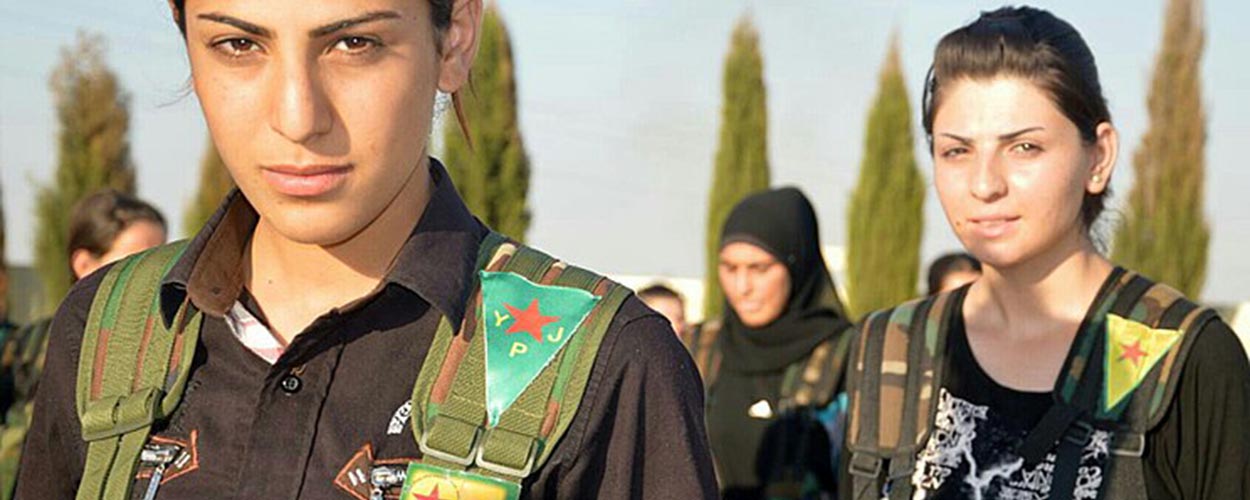
Fighters with the YPJ

Syria’s Kurds Return to Al Assad’s Fold

The plain of northeastern Syria, where the Trump White House vacillates over whether to dig deeper or pull up stakes, has become an archipelago of mass graves. During the three years that the Islamic State in Iraq and Syria dominated the remote landscape, it massacred thousands of civilians and captive Syrian government soldiers without allowing their families to bury them. Priyanka Motaparthy, acting emergencies director at Human Rights Watch, noted that the former capital of the Islamic State’s self-declared caliphate, Raqqa, had “at least nine mass graves, each one estimated to have dozens, if not hundreds, of bodies, making exhumations a monumental task.” Four hundred bodies were unearthed at Raqqa’s municipal zoo, and it will take months for families to identify the decomposed corpses. Other towns and villages in the Kurdish-administered zone are discovering similar grisly mementos of Islamic State rule.

The mainly Kurdish Syrian Democratic Council (SDC), which receives vital support from the United States and an estimated 2,000 special operations forces troops based in the northeast, made the unusual gesture on July 30 of returning to the Syrian army the remains of 44 soldiers who had been executed by the Islamic State in the village of Ain Issa in 2014. Ten days earlier, local officials had uncovered four mass graves near what had been the headquarters of the 93rd Brigade, and the Kurds used the occasion to help mend fences with President Bashar al Assad. The process of reintegrating the largest Kurdish-controlled region into the rest of Syria is underway, and the United States can do little to stop it.

Continue reading →
Magistrates Court of the Australian Capital Territory

Oil, Spies and Audiotape in East Timor

Conference in Algiers in the wake of the October Arab-Israeli War and the Arab oil embargo against Western countries supporting Israel. I remember meeting young men at my hotel from Portugal’s African colonies — Angola, Mozambique and Guinea Bissau. They had come to plead with the Arabs to keep withholding oil from Portugal even if they restored supplies to the United States. The conference’s declaration of Nov. 28 included the commitment to “sever all the diplomatic, consular, economic, cultural and other relations with South Africa, Portugal and Rhodesia of those Arab States which have not yet done so.” Economic hardship in Portugal produced the Carnation Revolution the next April, which overthrew the dictatorship and led to Portugal’s abrupt withdrawal from its colonial empire after four centuries.

Civil wars ensued in the largest colonies, Angola and Mozambique, while Portuguese East Timor, half of an island between Indonesia and Australia, awaited its fate. Indonesia claimed the territory, though the Timorese favored independence. The United States decided the issue on Dec. 6, 1975, when President Gerald Ford and Secretary of State Henry Kissinger descended on the Indonesian capital, Jakarta, to inform military dictator Suharto that East Timor was his for the taking. A cable from the U.S. Embassy quoted Kissinger on the legality of Indonesia’s use of U.S. weapons in invading East Timor: “It depends on how we construe it; whether it is in self-defense or is a foreign operation.” East Timor, which had no army, did not attack Indonesia, but the self-defense ruse was sufficient for Suharto to invade as soon as Ford and Kissinger departed. Indonesian forces killed more than 200,000 people in the operation — one-third of East Timor’s population — suppressed all civil rights, confiscated land and implanted settlers from Java.

Continue reading →
City of Damascus pictured from Mt Qasioun

Trump’s Road to Damascus and a Chance for Conversion

The last U.S. ambassador to serve in Damascus, Robert Ford, testified to Congress earlier this year that the “U.S. military and civilian costs in Syria over the past four years are at least $12 billion.” It is a high price for failure — failure to depose President Bashar al Assad, to break his alliance with Iran, to prevent Salafist jihadism from taking root in Syria for the first time, to maintain the friendship of U.S.-NATO ally Turkey, to save an estimated half-million Syrians from death and to stem the exodus of nearly half the Syrian population from their homes. Most of the dozen or so former officials of the Barack Obama administration to whom I have spoken in Washington over the past three weeks regret what transpired on their watch, but it’s too late for them to do anything about it.

President Donald Trump’s administration inherited the Syria mess when it entered the White House on Jan. 20, 2017. Its policy was anyone’s guess, reminding me of an old joke about an Irish farmer telling a tourist who asked for directions to Dublin, “Well, I wouldn’t be going there from here.” It is unclear how far Trump and his new foreign policy team, national security adviser John Bolton and Secretary of State Mike Pompeo, will commit the country’s money, armed forces and intelligence services to Syria. They could, if they dared, learn from the mistakes of Obama’s policies to avoid prolonging the war and deepening the United States’ involvement in it.

Continue reading →
Lebanese Elections 2018

Lebanon’s Election Ritual Repeats

Despite the topsy-turvy machinations of Lebanon’s elections May 6, the country’s voters awaited a more decisive verdict two days later from U.S. President Donald Trump. The Lebanese had no say in Trump’s election, but his decision to abrogate the 2015 Joint Comprehensive Plan of Action with Iran may seal their fate. In a confusing poll with a low turnout, voters gave a whopping number of seats to Iran’s Lebanese surrogate, Hezbollah, and its affiliated parties. To Iran, Saudi Arabia, Israel and the United States, Lebanon is little more than a venue for larger rivalries.

Lebanon, for all the headlines its troubles have earned it since 1975, is a small country without oil or mineral deposits. The weakness of small states often means that their elections don’t matter until people vote the wrong way and someone steps in, as President Woodrow Wilson did when invading Mexico in 1914 to “teach them to elect good men.” The Palestinians of Gaza learned the same lesson when they and Palestinians in the West Bank voted for Hamas on Jan. 25, 2006. The United States was so enraged that it backed a putsch by Hamas’ rival, Fatah, in Gaza in 2007 and, when that failed, supported Israel’s intensified blockade and several invasions of the territory beginning with Operation Cast Lead in 2008.

Continue reading →
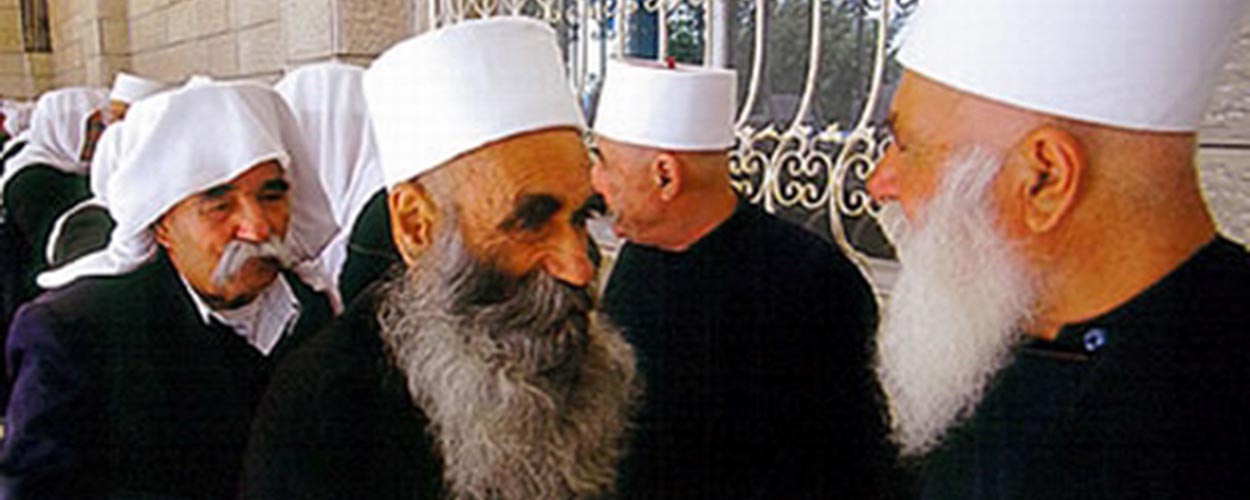
Druze sheikhs (Al Aqal) with white lap and black dress

Syria’s Druze Maintain a Difficult Neutrality

The most rebellious community in Syria’s modern history is a people called the Druze, most of whom live in a region called the Druze Mountain, Jabal al-Druze, about 70 miles south of Damascus. Members of this syncretic, semi-Shiite Muslim sect battled the country’s successive overlords, notably the Ottoman Turks in World War I and the French mandate authorities in the 1920s and ’30s. Syrian independence in 1946 did not dampen their enthusiasm for revolt, as they rose against nationalist regimes that they felt threatened their traditional ways of living. Yet when the biggest rebellion in the country’s history broke out in March 2011, the Druze stayed out.

The traditional leader of Lebanon’s Druze, Walid Jumblatt, called on his Syrian brethren to “join the Syrian rebels who are marking in blood heroic battles against oppression on a daily basis.” Jumblatt explained to me in 2012, “The Druze don’t live in an Alawite sea. They live in a Sunni sea.” In Jumblatt’s view, Druze survival depended on joining the majority Sunni population in opposition to rule by Alawites, another minority with roots in Shiite Islam. Although some Druze took part in peaceful demonstrations for reform in 2011, they did not turn to violence. Hassan al-Atrash, a biology teacher and former communist, said, “As far as people were concerned, this was not meant to be a war. They made legal demands for their rights.” They thus ignored Jumblatt’s call to join the rebels, but they did not join the Syrian army either.

Continue reading →
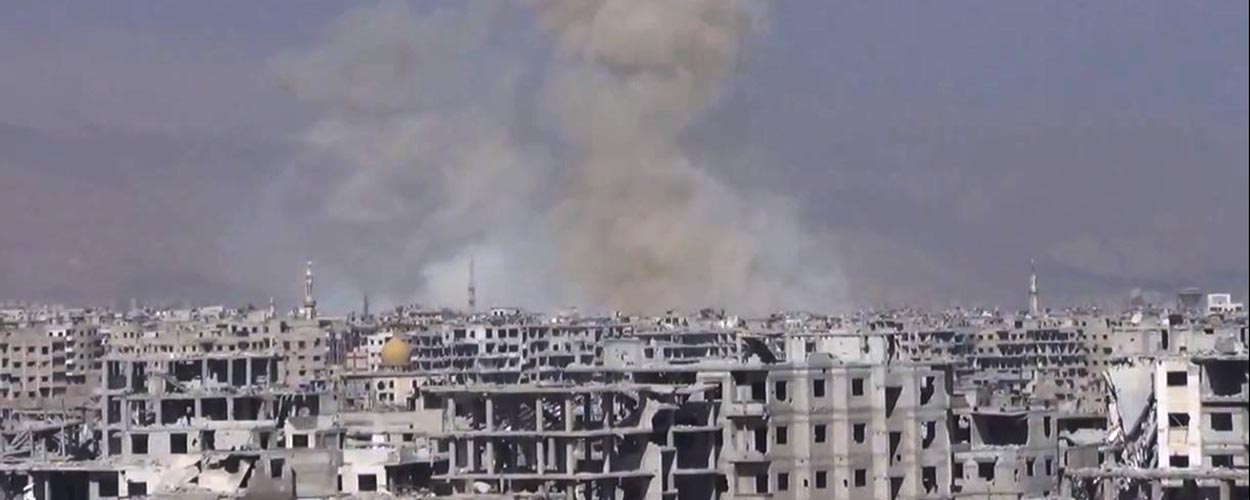
Ghouta under fire, February 2018

The Result of a Loyalist Victory in Syria’s Eastern Ghouta? More Violence

The jihadist revolution is dying in the eastern suburbs of the Syrian capital, Damascus. Syrian government forces, supported by aerial bombardment and heavy artillery barrages, have split the opposition-held territory of eastern Ghouta into two bastions and are eating away at both. The farmlands on which civilians and fighters in the besieged zones depended for food have fallen to the Syrian army and its related militias. Threatened with starvation and braving the government onslaught, some residents have defied army bombardment and rebel ire with public protests calling on the insurgents to leave. They claim that is the only way to end the hunger, privation, casualties, shelling and chaotic jihadist governance they have endured for years.

The major jihadist groups remaining in eastern Ghouta are Hayat Tahrir al-Sham (the Levant Liberation Committee, an insurgent coalition that includes the group formerly known as Jabhat al-Nusra), Jaish al-Islam (Army of Islam) and Faylaq al-Rahman (Legion of Mercy). An aid worker who has dealt with them says many rebels want to depart under security guarantees similar to those that permitted the evacuation of Homs and eastern Aleppo. “Jaish al-Islam wants to go to Daraa,” the worker says. “Faylaq wants to go to north Aleppo (province).” Other jihadists, however, are choosing to stay and fight at whatever cost to the area’s civilians. Russian-sponsored discussions on “reconciliation,” the government’s term for rebel surrender, continue against the background of the loyalists’ offensive and the insurgents’ mortar shelling of central Damascus.

Continue reading →
Afrin

Another Long War Unfolds in Syria

The war in Syria should be ending. The Islamic State has lost all the territory it seized in 2014. The Syrian army, backed by Russia and Iran, has confined other anti-government rebels to besieged pockets in the south, on the eastern outskirts of Damascus and in the northwest. Opposition hopes of removing Syrian President Bashar al Assad have vanished. But the war refuses to die. It just takes new forms.

The latest phase has little to do with Syria, apart from the fact that it’s taking place there. The antagonists are Turkish President Recep Tayyip Erdogan and the United States, which has declared a post-Islamic State mission that will keep American advisers and their local surrogates in Syria for years to come. The mission calls for the United States to train, arm and advise a 30,000-strong, mostly Kurdish border security force. Following the announcement of the project Jan. 14, Erdogan pledged “to strangle it before it’s even born.” He has moved Turkish military units to the border and launched artillery shells at Kurdish positions in their western enclave of Afrin.

Aware that his opposition to the U.S.-backed Kurdish force pits him against his largest NATO ally, Erdogan told members of parliament from his Justice and Development Party, “Hey, NATO! You are obliged to take a stance against those who harass and violate the borders of your members.” The mission threatens to tear the military bloc apart and to commit the United States to a long-term presence in a country where it has no strategic interest…

Continue reading →