Category Archives: american empire

Wayne Nixon by Joe CIardiello

Driving the Duke

Finding family and a hero while serving as John Wayne’s chauffeur during the production of The Green Berets.

In the fall of 1967, I went to work for Batjac Productions. It was a Monday-to-Friday job from around 3:30 in the afternoon—when I wasn’t in detention—until 6:30 or 7. The company had this 16-year-old Loyola High School senior photocopying scripts, answering fan mail, matching canceled checks to bank statements, running messages and film cans between Batjac’s offices at Paramount in Hollywood and Warner Bros. in Burbank, and, from time to time, driving John Wayne. The actor (and Batjac cofounder) always sat in the front passenger seat of his big, green Pontiac station wagon with the roof raised high to take all six foot four of him.

That work finished when I graduated, but in early August, I encountered Mr. Wayne in Miami during the Republican National Convention. The young woman from the airport rental car agency whom I was courting was impressed when she saw him stop and speak to me: “Charlie, what the hell are you doing here?” He didn’t wait for me to remind him that he had reprimanded me for putting a Nixon for President bumper sticker on the Pontiac without his permission. I wanted to tell him that this was my second convention as a party stalwart. Four years earlier, at the age of 13, I had been at the Cow Palace in Daly City when nominee Barry Goldwater declared, “I would remind you that extremism in the defense of liberty is no vice! And let me remind you also that moderation in the pursuit of justice is no virtue!” Let’s face it. I was a weird kid…

Continue reading →
If Joe Biden Really Wants to Celebrate Press Freedom, He Should Free Julian Assange

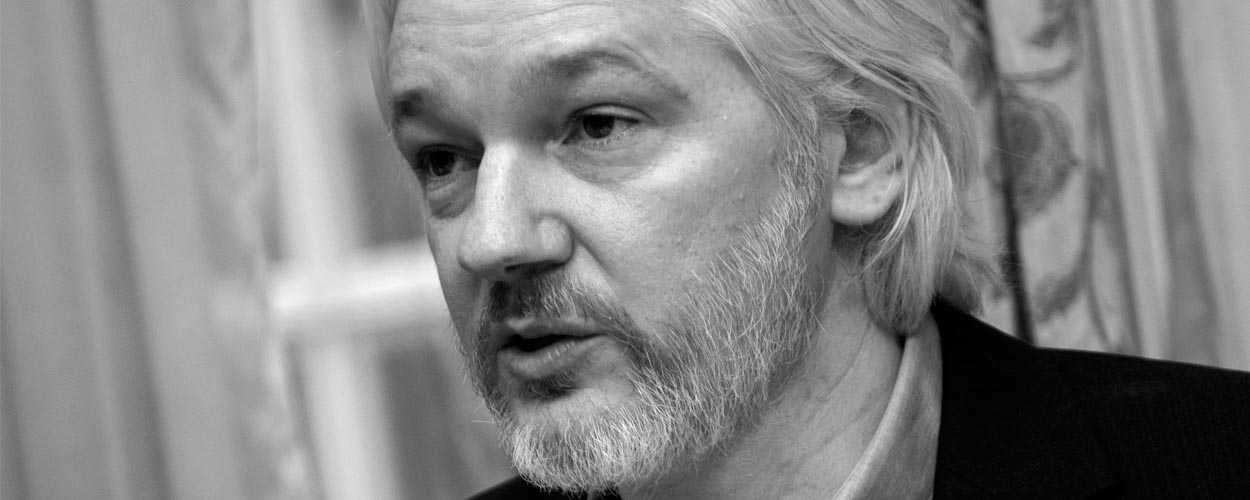
Joe Biden will celebrate World Press Freedom Day tomorrow. But it is a safe bet that he’ll have nothing to say about Assange or Imran Khan, both behind bars for defying the US.

President Joe Biden’s eloquence, such as it is, soars highest when he hymns alleluias to the free press. “Courageous journalists around the world have shown time and again that they will not be silenced or intimidated,” he proclaimed last year on the occasion of World Press Freedom Day. “The United States sees them and stands with them.” He reprised the theme last week at the White House Correspondents Association Dinner: “There are some who call you the enemy of the people. That’s wrong and that’s dangerous. You literally risk your lives doing your job.” The assembled correspondents, although themselves confronting no risk greater than crossing Pennsylvania Avenue to rewrite press secretary Karine Jean-Pierre’s handouts, applauded their stalwart champion.

The administration’s commitment to freedom of the press is rivaled only by its devotion to democracy beyond America’s borders. The public need not wait until 15 September — International Democracy Day — for the State Department to support fair elections in, say, Pakistan. Donald Lu, assistant secretary of state for South and Central Asian affairs, shared his concern for Pakistani electoral integrity in testimony to a House subcommittee on March 20. Lu, referring to February’s contested results, stated, “We have never used the term ‘free and fair’ in the characterization of this election.” Lu mentioned, among other deviations from democratic norms, “mass arrests of those in opposition, the shutdown of internet, and censorship and pressure placed on journalists.”

To the world’s journalists and Pakistan’s voters, the message is clear: America has your back. American actions, however, send a message at odds with Biden’s and Lu’s rhetorical flourishes: Don’t mess with Uncle Sam. Those who do will end up like Julian Assange in London’s Belmarsh Maximum Security Prison and Imran Khan in Rawalpindi’s Adiala Jail…

Continue reading →
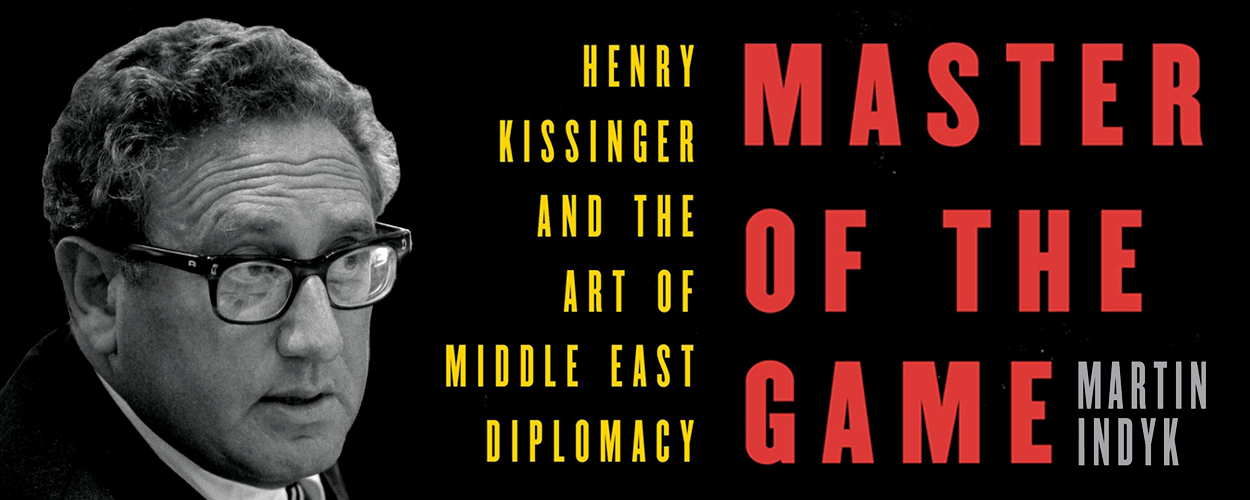
Master of the Game by Martin Indyk

He’ll have ye smilin’

Time​ magazine called him ‘Henry of Arabia’ and featured him on a cover in 1974. The headline read ‘Mideast Miracle’. Newsweek depicted him that same day as ‘Super K’ in a fluttering blue cape. The New York Times, Washington Post and the television networks piled on their own encomia. Henry Kissinger, already a media darling, had become the Middle East’s saviour, whose ‘shuttle diplomacy’, then a neologism, had ended the Arab-Israeli War of October 1973.

Nixon had appointed him secretary of state a month before the war broke out. Born Heinz Alfred Kissinger, the German-Jewish Harvard professor didn’t fit the State Department stereotype: all 55 of his predecessors were native-born WASPs. His Dr Strangelove accent remained a lifelong reminder of his émigré status. (Golda Meir, Israel’s prime minister at the time, told him that her foreign minister spoke better English than he did.) Yet after becoming a naturalised American at the age of twenty he liked to describe himself in terms of his adopted country’s folklore. He told a reporter that he was ‘a cowboy who rides alone into town with his horse and nothing else’. He also resembled another American frontier archetype: the pedlar whose wagonload of patent medicines promised to cure every ailment. By the time the rubes realised that his bottles contained snake oil, he had left town. ‘He’ll have ye smilin’,’ an old Irish saying goes, ‘while he takes the gold out of your teeth.’

In Master of the Game, Martin Indyk shows Kissinger at work before, during and after the October War, and highlights his most acclaimed achievements in its aftermath: persuading Israel to cede small patches of occupied territory and convincing Egypt and Syria to recognise the ‘Zionist entity’, at least de facto, by negotiating with it through him. Indyk’s account, while adding little to the historical record, makes exciting reading. And despite his veneration for Kissinger, Indyk acknowledges that the elaborate diplomatic manoeuvring was an exercise in damage control. After all, if it hadn’t been for Kissinger, there would have been no October War…

Continue reading →

Ruling Assange Can’t Be Extradited Is an Indictment of US Prisons

But the British court judgment, which is likely to be appealed, also delivers a body blow to freedom of speech.

My junior year high school English teacher liked to tell a story about Henry David Thoreau and Ralph Waldo Emerson to illustrate the differences between America’s two great transcendentalist writers. Thoreau was jailed in 1846 for withholding taxes that paid for the invasion of Mexico and protected slave owners. Emerson came to speak to Thoreau through the bars of his cell. My teacher, with theatrical flair and stentorian voice, recounted the conversation:

‘Emerson: “What are you doing in there, Henry David?”
Thoreau: “The question is, what are you doing out there, Ralph Waldo?”’

We might ask ourselves what we are doing out here while Julian Assange remains “in there” at Belmarsh Maximum Security Prison in London…

Read Julian Assange In His Own Words

Continue reading →
Penn, Zenger, Assange

If Assange’s Fate Were Up To a Jury, He, Too, Might Have Walked Free

Like William Penn and John Peter Zenger, the Wikileaks founder is fighting for our freedom.

When the magistrate presiding last September at Julian Assange’s extradition hearing, Vanessa Baraitser, confined the defendant to a bullet-proof glass cage at the back of the court, she had precedent on her side. All who entered her courtroom at London’s Central Criminal Court, the Old Bailey, had to pass a plaque memorializing a case against another defender of free speech and thought…

Continue reading →
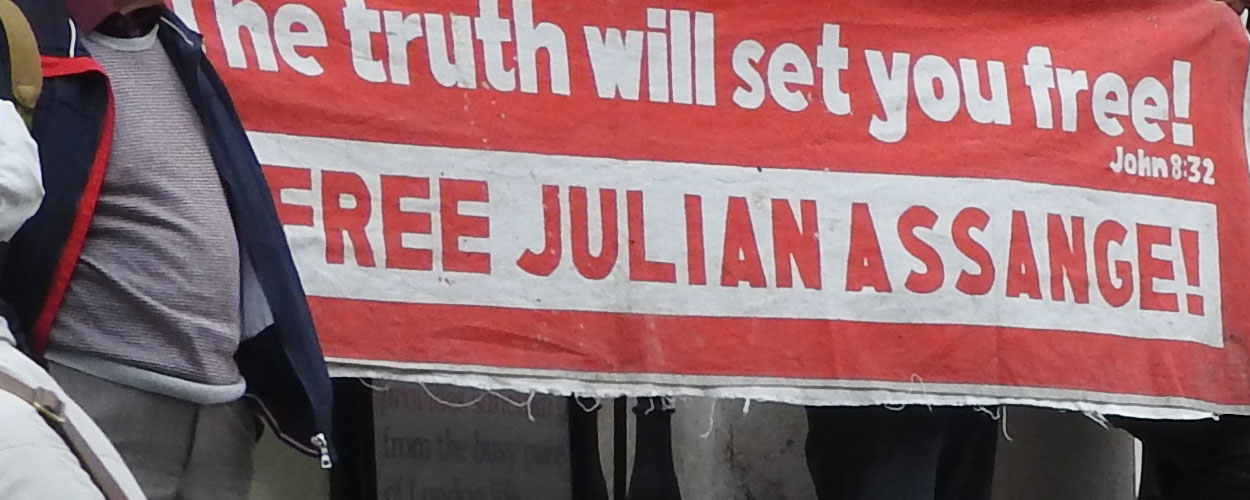
Free Julian Assange

Biden’s Choice on Julian Assange and the First Amendment

Assange’s liberty represents that of all journalists and publishers whose job is to expose government and corporate criminality without fear of prosecution.

When Joe Biden becomes president of the United States on January 20, a historic opportunity awaits him to demonstrate America’s commitment to the First Amendment. He can, in a stroke, reverse four years of White House persecution of journalism by withdrawing the application to extradite Julian Assange from Britain to the U.S. This would be in line with the departures from Trump policies Biden is proposing on health care, environmental protection, and tax fairness. Assange’s liberty represents the liberty of all journalists and publishers whose job is to expose government and corporate criminality without fear of prosecution. We need and deserve to be protected against government control of the press.

Continue reading →
Julian Assange

The Unprecedented and Illegal Campaign to Eliminate Julian Assange

Assange would never receive a fair trial in the U.S., but he’s not receiving one in Britain either. Over the 17 days of Julian Assange’s extradition hearing in London, prosecutors succeeded in proving both crimes and conspiracy. The culprit, however, was not Assange. Instead, the lawbreakers and conspirators turned out to be the British and American governments. Witness after witness detailed illegal measures to violate Assange’s right to a fair trial, destroy his health, assassinate his character, and imprison him in solitary confinement for the rest of his life.

Continue reading →
Julian Assange

Free Julian Assange!

By depriving the WikiLeaks founder of his freedom, prosecutors in the US and Britain are intimidating journalists—and abetting torturers, war criminals, and kleptocrats everywhere.

If WikiLeaks did not exist, the public would know much less than it does about what government and politicians are doing in its name.

When a 35-year-old Australian named Julian Assange launched WikiLeaks with a few like-minded friends in 2006, he little knew what exposing malfeasance would cost him. The WikiLeaks model was simple: provide a safe repository for documents showing state and corporate wrongdoing while guaranteeing anonymity for the leaker. Newspapers were not necessarily safe for whistle-blowers, as British civil servant Sarah Tisdall discovered in 1983 when London’s The Guardian caved in to a court order and handed over documents that identified her as the source for its story on US cruise missile deployment in the UK. She went to prison for four months and lost her job…

Continue reading →

From the Somme to the Persian Gulf, Lessons on Shows of Force

When farmers in this part of Northern France plow their fields, they unearth relics of the war that ended here just over a century ago: shell casings, gas masks, skulls. The tranquil landscape, as flat as the plains of Kansas, belies the memory of the first day of the Battle of the Somme on July 1, 1916, when 21,000 British soldiers died charging across a few hundred yards of shell craters, weeds and barbed wire into German machine guns. That futile offensive raged until the following November, when death had claimed 1.5 million lives on both sides of the trenches. The war’s architects had not envisioned such slaughter when they mobilized young recruits in August 1914 on promises of an easy victory.

The historian Christopher Clark depicted the statesmen who led Europe into the Great War as men walking blind in their sleep through an open window. In his magnificent book, The Sleepwalkers: How Europe Went to War in 1914, Clark wrote, “The conflict that began that summer mobilized 65 million troops, claimed three empires, 20 million military and civilian deaths, and 21 million wounded.” That had not been the intention, any more than the treaty ending the war was supposed to produce another cataclysm 20 years later that would claim a further 60 million lives…

Continue reading →

The Danger of Judging by Appearance and the Power of Reaching Out

They call themselves the OWGs, Old White Guys. The oldest is 78, the youngest 65. Their profile fits the pundits’ picture of Trump voters: white, Christian and born before the Vietnam War. Their home is Raleigh, North Carolina, in the old Confederacy, which allegedly breeds bigots. But these white senior citizens are doing more than the police or social services to oppose the bigotry that breeds violence between races and religions. It started with three murders on their doorstep.

It was just after 5 p.m. on Feb. 10, 2015, prosecutors allege, when a 46-year-old white male named Craig Stephen Hicks entered his neighbors’ apartment in Chapel Hill, about 30 miles from Raleigh, and shot dead three unarmed university students. The victims were sisters Yusor and Razan Abu-Salha and Yusor’s husband, Deah Barakat. The women were 21 and 19. Deah, a lanky 6-foot-3-inch basketball lover, was 23. Photographs taken while they were alive portray three healthy, smiling young Americans who happened to be Muslim. Before Deah and Yusor had completed their dental studies at the University of North Carolina or Razan could earn her architecture degree, they were dead. Hicks is expected to face trial on murder charges this summer.

Continue reading →