Category Archives: american empire

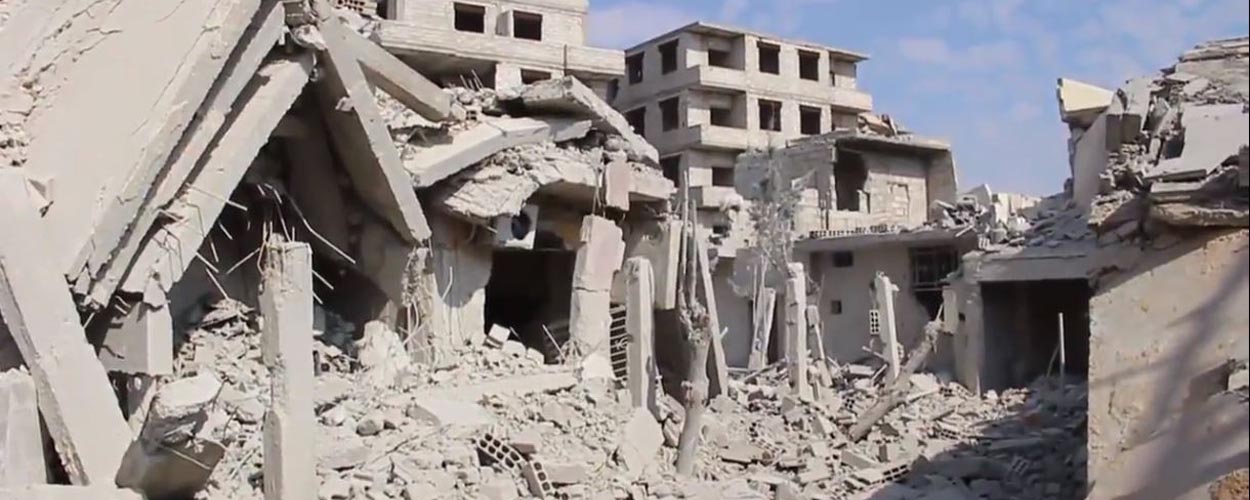
Ruins at Zamalka, Ghouta, Syria, 22nd Feb 2018

Tell me how this ends

In January 2017, following Donald Trump’s inauguration, his national security staffers entered their White House offices for the first time. One told me that when he searched for the previous administration’s Middle East policy files, the cupboard was bare. “There wasn’t an overarching strategy document for anywhere in the Middle East,” the senior official, who insisted on anonymity, told me in a coffee shop near the White House. “Not even on the ISIS campaign, so there wasn’t a cross-governmental game plan.”

Rob Malley, President Barack Obama’s senior Middle East adviser and Harvard Law School classmate, denied the charge. “That can’t be true,” the fifty-­five-­year-­old scholar insisted when we met in his office at the International Crisis Group in Washington. “We provided comprehensive memoranda to the incoming team, though we can’t know if they read them. We definitely had a long one on Syria, on all aspects of the conflict.”

I have observed the Syrian conflict off and on since it began, in 2011, filing stories from Damascus, Aleppo, Homs, Palmyra, the Turkish border, and other zones of contention. But the story as seen from inside Syria seemed as incomplete as the Trojan War without the gods. In the conflagration’s eighth year, I flew to the Olympian heights of Washington to ask the immortals what they were doing while an estimated half million of Syria’s twenty-­three million inhabitants were dying, millions more fled the country, and some of civilization’s most precious monuments were destroyed…

Continue reading →

World War Two’s Covert Ops Are Failing in the Post-War World

Before President Barack Obama authorized clandestine operations to defeat Syrian President Bashar al Assad in 2013, he asked the CIA to write the history of its secret wars. The classified document, say those who have read it, is a record of failure from Albania to Cuba to Angola to Nicaragua. Yet Obama went ahead with the covert program for Syria, which the CIA ran from Turkey and Jordan. Like its predecessors, Operation Timber Sycamore failed. It neither toppled Assad nor prevented Salafi jihadi fanatics from dominating the Syrian opposition. President Trump cancelled the program in July last year, but he is not immune to the siren call of another secret war – in his case, against Iran with as much chance of a positive outcome as Syria.

Why the fascination with arming foreign insurgents and proxy armies to fight wars that the US won’t fight itself? “We’re busily training, you know, local troops to fight local militants, why do we think we have this aptitude for creating armies?” Andrew Bacevich, a retired army colonel and author of America’s War for the Greater Middle East, once told me. “I don’t know. It sure as hell didn’t work in Vietnam.” Two reasons stand out. One is that, as Bacevich explained, insurgencies are wars “on the cheap,” not only in dollars but in assuring the public that American soldiers’ lives are not in danger. It is also a midway point between invasion and doing nothing. And most American presidents, faced with an opportunity to undermine rival states, want to do something.

Continue reading →
City of Damascus pictured from Mt Qasioun

Trump’s Road to Damascus and a Chance for Conversion

The last U.S. ambassador to serve in Damascus, Robert Ford, testified to Congress earlier this year that the “U.S. military and civilian costs in Syria over the past four years are at least $12 billion.” It is a high price for failure — failure to depose President Bashar al Assad, to break his alliance with Iran, to prevent Salafist jihadism from taking root in Syria for the first time, to maintain the friendship of U.S.-NATO ally Turkey, to save an estimated half-million Syrians from death and to stem the exodus of nearly half the Syrian population from their homes. Most of the dozen or so former officials of the Barack Obama administration to whom I have spoken in Washington over the past three weeks regret what transpired on their watch, but it’s too late for them to do anything about it.

President Donald Trump’s administration inherited the Syria mess when it entered the White House on Jan. 20, 2017. Its policy was anyone’s guess, reminding me of an old joke about an Irish farmer telling a tourist who asked for directions to Dublin, “Well, I wouldn’t be going there from here.” It is unclear how far Trump and his new foreign policy team, national security adviser John Bolton and Secretary of State Mike Pompeo, will commit the country’s money, armed forces and intelligence services to Syria. They could, if they dared, learn from the mistakes of Obama’s policies to avoid prolonging the war and deepening the United States’ involvement in it.

Continue reading →
Lebanese Elections 2018

Lebanon’s Election Ritual Repeats

Despite the topsy-turvy machinations of Lebanon’s elections May 6, the country’s voters awaited a more decisive verdict two days later from U.S. President Donald Trump. The Lebanese had no say in Trump’s election, but his decision to abrogate the 2015 Joint Comprehensive Plan of Action with Iran may seal their fate. In a confusing poll with a low turnout, voters gave a whopping number of seats to Iran’s Lebanese surrogate, Hezbollah, and its affiliated parties. To Iran, Saudi Arabia, Israel and the United States, Lebanon is little more than a venue for larger rivalries.

Lebanon, for all the headlines its troubles have earned it since 1975, is a small country without oil or mineral deposits. The weakness of small states often means that their elections don’t matter until people vote the wrong way and someone steps in, as President Woodrow Wilson did when invading Mexico in 1914 to “teach them to elect good men.” The Palestinians of Gaza learned the same lesson when they and Palestinians in the West Bank voted for Hamas on Jan. 25, 2006. The United States was so enraged that it backed a putsch by Hamas’ rival, Fatah, in Gaza in 2007 and, when that failed, supported Israel’s intensified blockade and several invasions of the territory beginning with Operation Cast Lead in 2008.

Continue reading →