Tag Archives: The Intercept

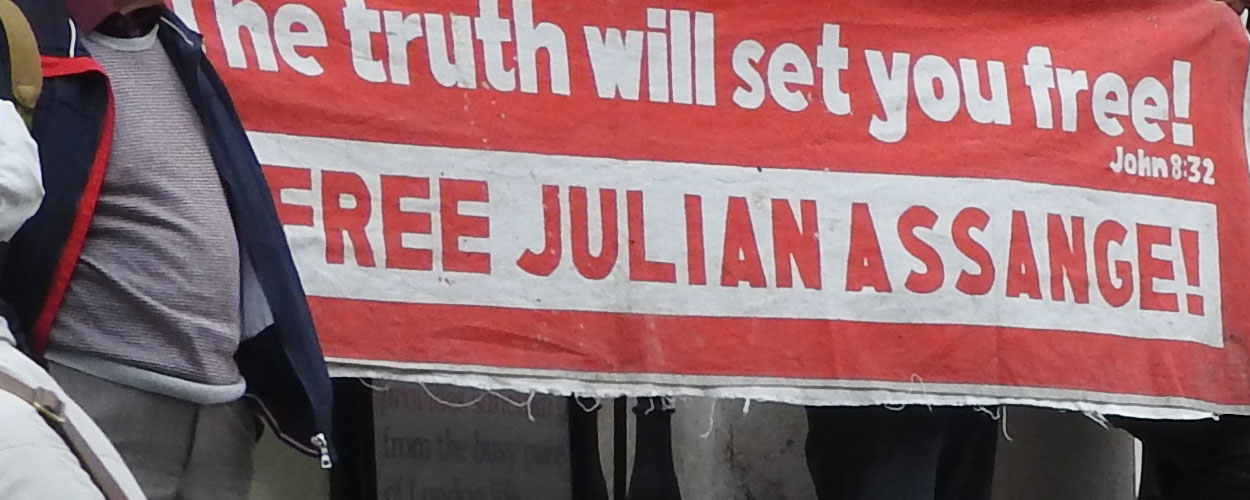
Free Julian Assange

Biden’s Choice on Julian Assange and the First Amendment

Assange’s liberty represents that of all journalists and publishers whose job is to expose government and corporate criminality without fear of prosecution.

When Joe Biden becomes president of the United States on January 20, a historic opportunity awaits him to demonstrate America’s commitment to the First Amendment. He can, in a stroke, reverse four years of White House persecution of journalism by withdrawing the application to extradite Julian Assange from Britain to the U.S. This would be in line with the departures from Trump policies Biden is proposing on health care, environmental protection, and tax fairness. Assange’s liberty represents the liberty of all journalists and publishers whose job is to expose government and corporate criminality without fear of prosecution. We need and deserve to be protected against government control of the press.

Continue reading →
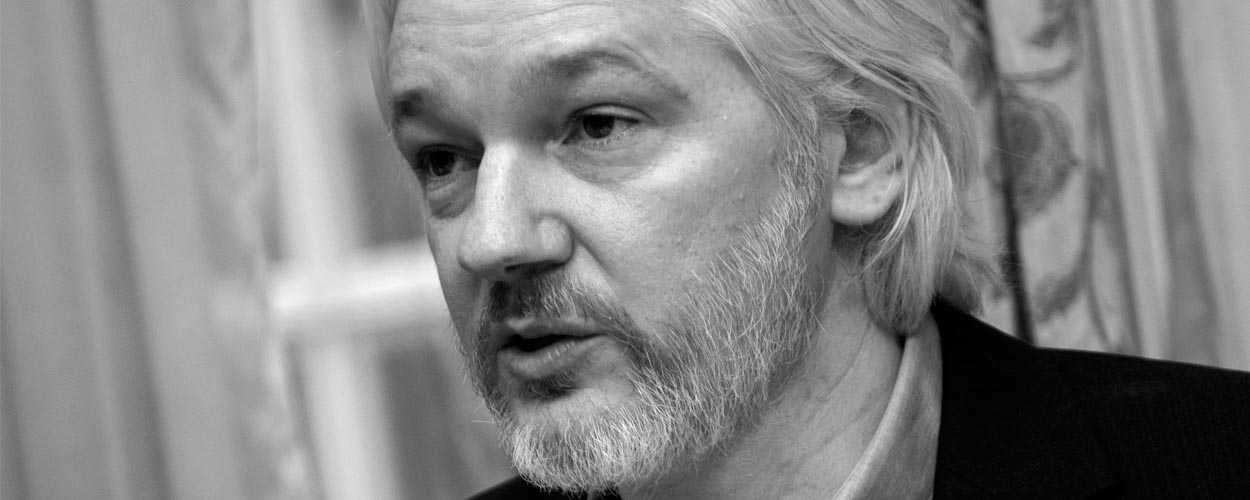
Julian Assange

The Unprecedented and Illegal Campaign to Eliminate Julian Assange

Assange would never receive a fair trial in the U.S., but he’s not receiving one in Britain either. Over the 17 days of Julian Assange’s extradition hearing in London, prosecutors succeeded in proving both crimes and conspiracy. The culprit, however, was not Assange. Instead, the lawbreakers and conspirators turned out to be the British and American governments. Witness after witness detailed illegal measures to violate Assange’s right to a fair trial, destroy his health, assassinate his character, and imprison him in solitary confinement for the rest of his life.

Continue reading →
Julian Assange

Julian Assange Languishes in Prison as His Journalistic Collaborators Brandish Their Prizes

While Julian Assange languishes in south London’s maximum security Belmarsh Prison, a British court is weighing his fate. The 48-year-old Australian founder of Wikileaks is serving time for the minor crime of jumping bail by taking asylum in the Ecuadorian embassy in 2012 to avoid extradition to Sweden. His fear at the time was that the Swedes, with a track record of assisting rendition of suspects sought by the U.S., would send him straight across the Atlantic. Now that he has lost his diplomatic refuge, 70 British members of Parliament have petitioned to dispatch Assange to Sweden if prosecutors there reopen the case they closed in 2017. The greater threat to his liberty is the United States Department of Justice’s extradition demand for him to stand trial in the U.S. for conspiring with Chelsea Manning to hack a government computer.

The U.S. insists Assange will not face the death penalty. If he did, Britain, in common with other European states, would not be able to send him there. The maximum sentence for the hacking offense is five years, but there is no guarantee that, once he arrives in the U.S., he will not face additional charges under the Espionage Act of 1917 that President Barack Obama used against nine individuals for allegedly leaking secret information to the public. The sentence for that offense could be death or life in prison. If Assange ends up in the U.S. federal judicial system, he may never been seen again.

Continue reading →

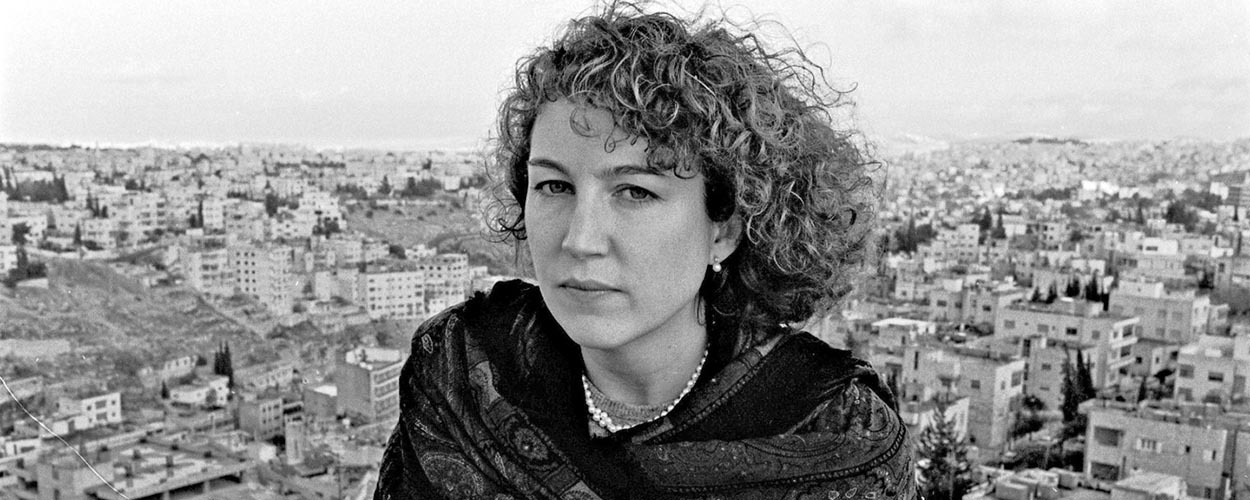
Marie Colvin Dedicated Her Extraordinary Life to Describing “What Really Happens in Wars”

The extraordinary life of war reporter Marie Colvin would have merited a biography even if she had survived the Syrian army’s bombardment of Homs in February 2012. Long before her fatal trip into the city’s rebel-held Baba Amr quarter, producers had proposed turning her life into an action-packed movie. It was only after her death that two films, a documentary and a drama, appeared. Now, Lindsey Hilsum has written the book “In Extremis: The Life and Death of the War Correspondent Marie Colvin,” and it is one of the best biographies I have read about any journalist. Colvin’s trajectory, personal as much as professional, was fascinating by any standard for the passion and turmoil that shadowed her from birth to untimely death. This is a great story, well told.

The controversy surrounding Colvin’s death partially overshadowed her achievements in life. Her family, friends, and Syrian opposition believe that the Syrian government assassinated her by targeting the Homs Media Center, where she and other correspondents were sending vivid reports of civilian suffering. Yet countervailing narratives persist. One is that the insurgents put journalists in harm’s way to create Western martyrs for their cause. Another is that Colvin and 28-year-old French photographer Rémi Ochlik were unlucky casualties of a military campaign that took thousands of civilian lives.

Continue reading →
Injustice: The Story of the Holy Land Foundation Five

The Unjust Prosecution of the Holy Land Foundation Five

“For the law holds, that it is better that ten guilty persons escape, than that one innocent suffer,” wrote Sir William Blackstone in 1765, expressing a fundamental principle of Anglo-Saxon justice. Miko Peled, in “Injustice: The Story of the Holy Land Foundation Five,” his exhaustive study of the U.S. government’s case against five defendants from a friendless minority, demonstrates how American justice has deviated so far from Blackstone that the courts can convict a hundred innocents for one who is guilty. “Injustice” portrays a modern version of Franz Kafka’s “Trial” in which five Palestinian-Americans confront the character Joseph K.’s dilemma: “K. was living in a free country, after all, everywhere was at peace, all laws were decent and were upheld, who was it who dared accost him in his own home?”

The FBI, the Treasury Department, and other assorted police forces in Texas and California accosted them with raids on most of their family houses early in the morning on July 26, 2004. The criminal trial against the Holy Land Foundation Five — or HLF 5, as the five Arab-Americans became known, a reference to the Islamic charity they founded in 1990 — opened exactly three years later. It culminated in a hung jury. The retrial in Dallas federal court began in September 2008, and included unprecedented testimony from “Avi,” the pseudonym assumed by an Israeli intelligence agent whose qualifications the defense was unable to probe. Judge Jorge Solis, although he instructed jurors that they were allowed to weigh the agent’s credibility in light of his anonymity, nonetheless brushed aside the defendants’ right under the Sixth Amendment “to be confronted with the witnesses against him.” Nothing in the U.S. Constitution until then permitted conviction by anonymous accusations, but the court convicted all five men.

Continue reading →
Gaza: an inquest into its martyrdom

As Gaza sinks into desperation, a new book makes the case against Israeli brutality

Israel celebrates a double anniversary on May 15 this year, the founding of the state and the formal establishment of the Israeli Defense Forces, the name the state gave to its combined army, navy, and air force. Armed statehood fulfilled the political Zionists’ dream of gathering Jews from the ancient Diaspora under their own government in what they declared to be their “promised land.” During the battle over the land between 1947 and 1949, the IDF expelled three-quarters of the indigenous population. Of the 750,000 Palestinian Arabs who fled, 250,000 took shelter in Gaza, a tiny pocket of southwest Palestine then occupied by the Egyptian army. The destitute and traumatized refugees were three times more numerous than the 80,000 Gazans who took them in.

The United Nations passed but did not enforce annual resolutions calling for the refugees’ return. Israel invaded the territory in 1956, withdrew under American pressure in 1957, and invaded again in 1967. As its population grew to nearly 2 million souls packed into a pocket five miles wide and 40 miles long, Gaza has become a byword for misery. Former British Prime Minister David Cameron, no advocate of the Palestinian cause, called it “an open-air prison.”

In his new book, Gaza: An Inquest Into Its Martyrdom, Norman Finkelstein presents Gaza’s case like a veteran prosecutor at a homicide trial. “This book is not about Gaza,” he writes. “It is about what has been done to Gaza.”

Continue reading →

“Rise and Kill First” Explores the Corrupting Effects of Israel’s Assassination Program

In the mid-1960s, television comedy writer Sol Weinstein produced a series of satirical novels about agent Israel Bond of M 33 and 1/3, a barely disguised Mossad.

As Ronen Bergman makes clear in his penetrating exposé of Israel’s mostly secret assassination program, “Rise and Kill First: The Secret History of Israel’s Targeted Assassinations,” the agents who Israel sent out to murder its enemies were never very funny. Israel is a rarity among nations: Rather than confine its assassins to the shadows, it promotes them to prime minister. Bergman’s history records extra-judicial, face-to-face murders by Menachem Begin, Yitzak Shamir, Ariel Sharon, and Ehud Barak, all of whom rose to head the Israeli government. This meticulously researched book, written over seven and a half years, exposes a state apparatus that blurs distinctions between intelligence-gathering and operations, soldiers and assassins, politicians and killers, yet claims more triumphs than defeats.

Bergman, an Israeli former lawyer and investigative journalist, charts not only the details of assassinations over the past century, but also the corrupting effect of relying on the black to the exclusion of diplomacy and compromise. Why negotiate with your enemies when it’s so easy to kill them?

Continue reading →

The Voices of Syria Have Always Been Ignored by the West

The Syrian story is a tapestry of tales, woven together from pain and courage, love and hate, innocence suffocated, and cruelty ascendant, that remains undeciphered by those who are determining the fate of that ancient land. Wendy Pearlman writes in We Cross a Bridge and It Trembled, her book of interviews with exiles from Syria’s six-year war, “One wonders what might have been different had we listened to Syrian voices earlier.”

Disregarding Syria’s people has been a constant theme since the creation of modern Syria in 1920. Had anyone listened to them, the multiple tragedies of the past century might have been avoided. France and Britain, after expelling the Ottomans from their Arab empire during World War I, excelled at denying Syrians a voice in their destiny. With the notorious Sykes-Picot Agreement, they severed what became Syria from its historic peripheries in Lebanon and Palestine. Ghayth Armanazi, in The Story of Syria, a sympathetic history of his homeland, called the Anglo-French accord “an iconic example of imperial deceit and duplicity.” After dividing Syria, the British and French imposed colonial rule on inhabitants, who had made clear their unanimous desire for independence in multiple petitions to the King-Crane Commission, sent by U.S. President Woodrow Wilson to gauge public opinion. The British and French armed forces crushed rebellions and uprisings to enforce their rule throughout their tenure in the Levant.

When independence came in the aftermath of World War II, the CIA took no more account of Syria’s “voices” than the British and French had. It engineered a military coup that overthrew the parliamentary government in 1949, setting a precedent for the army, a construct of French rule, to govern without consulting the populace any more than the imperialists had. Repeated wars with Israel led to a loss of face and territory, and the displacement of hundreds of thousands of Palestinians, as well as Syrians, who were driven from their villages in the Golan Heights. An experiment in Arab unity — the United Arab Republic that cleaved Syria to Egypt from 1958 to 1961— was another failure of governance. The Syrian military occupation of Lebanon that began in 1976 ended in ignominy in 2005, with a forced withdrawal amid sharp hostility from the Sunni Muslim community that had once seen their country as part of historic Syria…

Continue reading →